Why Do Guinea Pigs Have Whiskers?
Those cute face-hairs are actually sophisticated sensory organs — here’s what they do (and why you must never trim them).
Guinea pig whiskers aren’t decoration — they’re specialized sensory organs called vibrissae, and they’re essential to how your pig navigates the world. Unlike ordinary fur, whiskers are thicker, stiffer, rooted much deeper in the skin, and packed with nerve endings, so they act like highly sensitive feelers. Guinea pigs use them to judge whether they can fit through a gap (whiskers are roughly as wide as their body!), to sense objects close to their face — including in their blind spot right under the nose — to feel their way in the dark, and to protect their eyes. They’re especially important because guinea pigs have poor eyesight, so whiskers fill in what their eyes can’t see. The single most important rule: never trim or cut your guinea pig’s whiskers. Doing so genuinely impairs their ability to navigate. Here’s the full story.
What Are Whiskers, Exactly?
Whiskers have a proper scientific name — vibrissae — and they are genuinely different from the fur on the rest of your guinea pig’s body. While they look like hair, their anatomy tells another story:
- They’re thicker, stiffer, and much longer than ordinary fur.
- They’re rooted far deeper in the skin than normal hairs.
- Each follicle is richly supplied with nerve endings and motion sensors, so the slightest bend or brush of a whisker sends detailed information to the brain.
That’s why it’s most accurate to think of whiskers not as hair at all, but as an extra sensory organ — a kind of touch-antenna for your guinea pig.
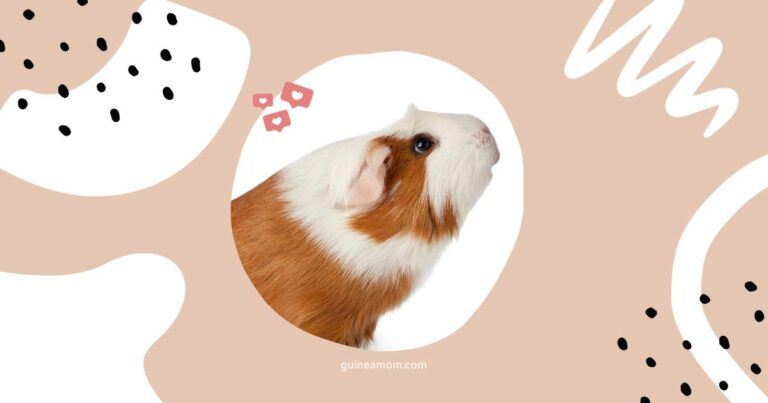
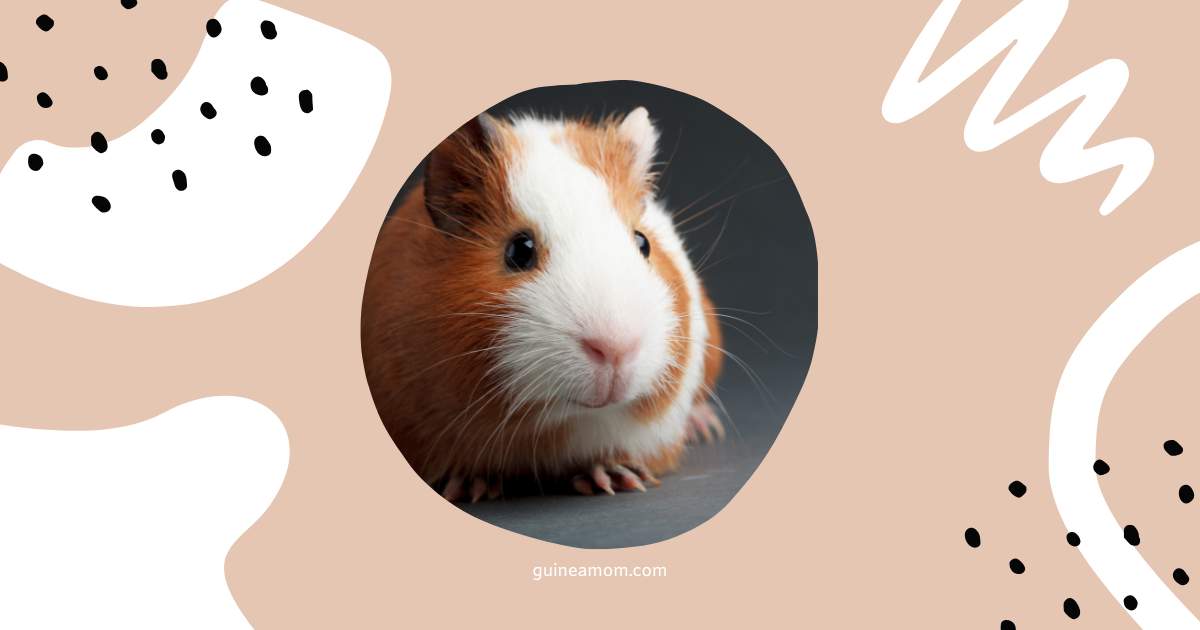
Where are they? Guinea pigs have whiskers in several places on the face: on the muzzle (the classic “moustache” arrangement on either side of the nose), on the cheeks, above and around the eyes, and under the chin. And a fun detail — in some breeds with curly coats, like Texels and Teddies, the whiskers can be curly too!
What Do Guinea Pig Whiskers Do?
Whiskers do several important jobs:
1. Measuring gaps — the “am I going to fit?” test. This is the classic whisker function. A guinea pig’s whiskers extend roughly to the width of its own body, which makes them a brilliant built-in measuring tool. When a pig approaches a narrow gap, tunnel, or space, the whiskers touch the edges — and if the whiskers don’t fit comfortably, the pig knows its body won’t either, and won’t attempt it. It’s a natural, instant “will I get stuck?” sensor.
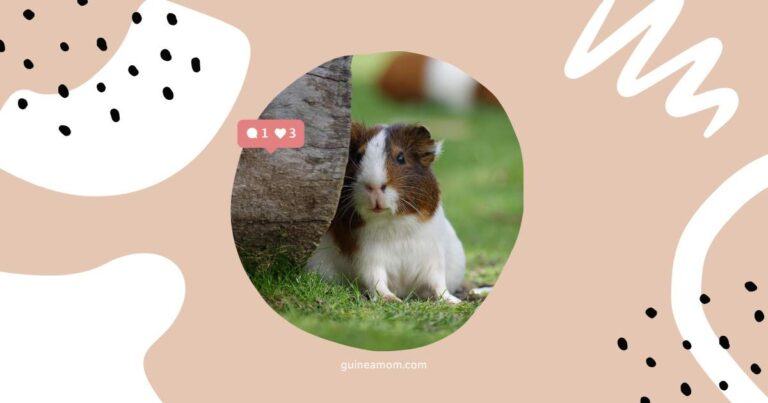
2. Sensing objects close to the face. Guinea pigs have limited ability to focus on things right in front of them, plus a blind spot directly under their nose. Whiskers fill that gap, telling them exactly what’s immediately around their face — including food they can’t actually see.
3. Navigating in the dark. When light is poor (and guinea pigs don’t see well in the dark), whiskers let them feel their way around, detecting objects, surfaces, and even changes in air currents.
4. Helping with spatial awareness and depth. Since guinea pigs have poor depth perception, whiskers give extra information about how near objects are and how a space is laid out.
5. Protecting the eyes. The whiskers around the eye area act as an early-warning system — when something brushes them, it can trigger a protective blink reflex, shielding the eyes from injury.
6. Social and tactile behavior. Whiskers also play a role in touch-based social interaction between guinea pigs.
A Fascinating Guinea Pig Difference
Here’s a genuinely interesting detail from scientific research: many rodents (like rats and mice) actively “whisk” — rhythmically sweeping their whiskers back and forth to actively scan their surroundings. Guinea pigs don’t do this.
A study examining guinea pig whisker anatomy found they have a somewhat disorganized whisker layout with a notable concentration of whiskers around the eye area, along with reduced whisker musculature (particularly the intrinsic muscles that drive whisking in other rodents). So guinea pigs use their whiskers more passively — feeling what they brush against, rather than actively sweeping them around.
But — and this is the key point the researchers made — the fact that guinea pigs have retained their whisker layout and musculature at all suggests whiskers still serve important functions for them, including protecting the eyes and tactile social behaviors. Evolution doesn’t keep expensive equipment that isn’t useful.
Never Trim Your Guinea Pig’s Whiskers
This is the most important practical takeaway: do not cut, trim, or clip your guinea pig’s whiskers — not even if they look comically long.
Trimming whiskers effectively removes your pig’s sensory equipment. One owner put it perfectly: cutting whiskers is like removing the parking sensors from a car. Without them, a guinea pig:
- Can’t judge whether it fits through gaps (risking getting stuck)
- Loses awareness of objects near its face
- Becomes more accident-prone and clumsy
- Has a harder time navigating, especially in the dark
- Loses some eye protection
Given that guinea pigs already have poor eyesight, taking away their whiskers makes life genuinely harder and more disorienting for them.
If you’re grooming a long-haired pig, be careful around the face so you don’t snip whiskers by accident. And if whiskers do get cut accidentally, don’t panic — they grow back. Just avoid it happening again, and be extra careful in the meantime.
Why Are My Guinea Pig’s Whiskers Missing or Broken?
If you notice a pig’s whiskers looking short, chewed, or missing, the most common cause is barbering — when one guinea pig chews or nibbles the fur (and whiskers) of a cage mate.
Barbering can happen for a few reasons:
- Dominance behavior — establishing who’s boss
- Boredom — not enough enrichment or stimulation
- Overcrowding — too little space
- Not enough fiber — insufficient hay to chew
If your pigs are barbering each other, it’s worth checking those boxes: make sure they have unlimited hay, a big enough cage, plenty of enrichment and floor time, and a compatible pairing. Whiskers do grow back, but persistent barbering is a signal that something in their setup needs improving. (Occasionally, hair loss can also be a health issue like mites or fungal infection — so if fur is missing in patches or the skin looks irritated, see a vet.)
Whiskers and Blind Guinea Pigs
Here’s something lovely: blind or visually-impaired guinea pigs get around remarkably well, largely thanks to their whiskers (along with smell, hearing, and memory). For a pig that can’t see, whiskers become an even more vital navigation tool.
So if you care for a blind guinea pig, be especially careful never to damage their whiskers, keep their environment layout consistent (so they can learn and remember it), and approach gently so as not to startle them.
Key Takeaways
- Whiskers (vibrissae) are sensory organs, not decoration — thicker, stiffer, deeper-rooted, and packed with nerve endings compared to normal fur.
- They’re found on the muzzle, cheeks, above the eyes, and under the chin — and can even be curly in breeds like Texels and Teddies.
- They measure gaps — roughly as wide as the pig’s body, so they signal whether a space is safe to squeeze through.
- They sense objects near the face (including in the nose blind spot), aid navigation in the dark, help with spatial awareness, and protect the eyes.
- Guinea pigs don’t actively “whisk” like rats and mice — research shows reduced whisker musculature and a concentration around the eyes, suggesting more passive use, but whiskers still matter.
- Never trim or cut whiskers — it impairs navigation and makes pigs accident-prone (though they do grow back if cut accidentally).
- Missing whiskers often mean barbering — check for dominance issues, boredom, overcrowding, or too little hay; see a vet if there’s patchy hair loss or skin irritation.
- Blind guinea pigs rely heavily on whiskers — protect them and keep their environment consistent.
This article is intended as general educational information for guinea pig owners and is not a substitute for professional veterinary advice. If your guinea pig has patchy hair loss, irritated skin, or persistent barbering, consult a qualified veterinarian experienced with guinea pigs.