Differences Between Guinea Pig Breeds
What really sets the breeds apart, what stays the same — and how to tell the look-alikes apart.
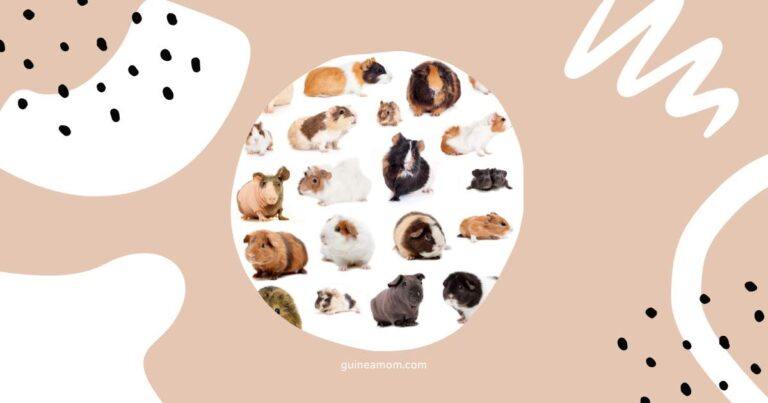
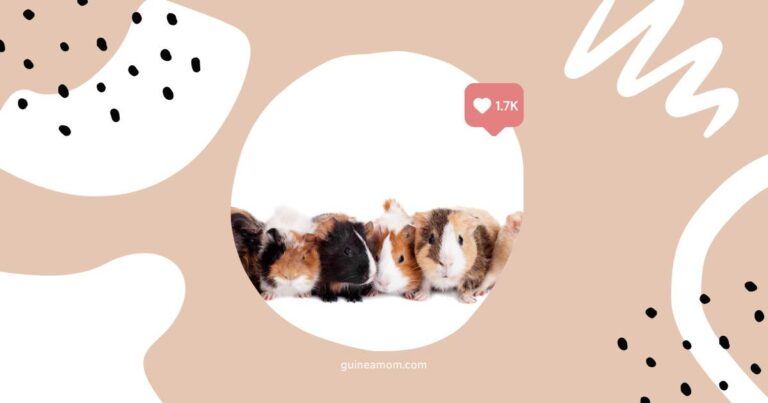
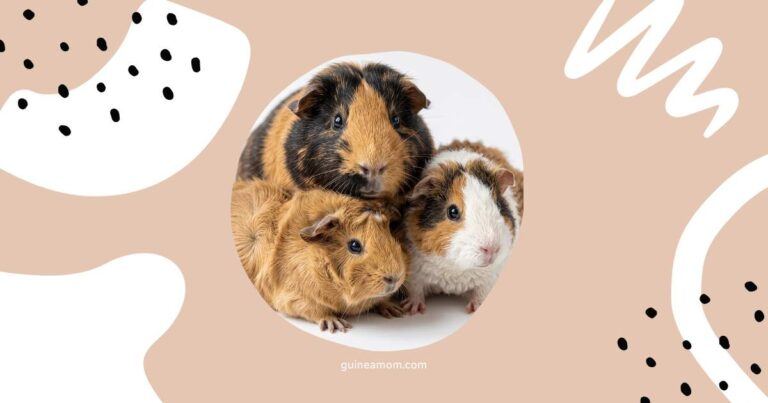
The differences between guinea pig breeds come down almost entirely to the coat — its length, texture, structure, and color — plus, in a few cases, how much care and grooming each breed needs. Where breeds differ: coat type (short, long, curly, rosetted, or hairless), grooming demands (from minimal to daily), and appearance. Where breeds are surprisingly the same: body size, lifespan, diet, social needs, basic care, and — importantly — temperament, which depends on the individual pig far more than the breed. So when comparing breeds, the practical question isn’t really “which is friendliest?” (any can be) but “how much grooming and special care does this coat involve?” Below, we’ll compare the differences that matter, note what stays constant, and help you tell apart the breeds that look almost identical.
The Differences That Actually Matter
When you line guinea pig breeds up against each other, a handful of real differences stand out — and nearly all of them trace back to the coat.
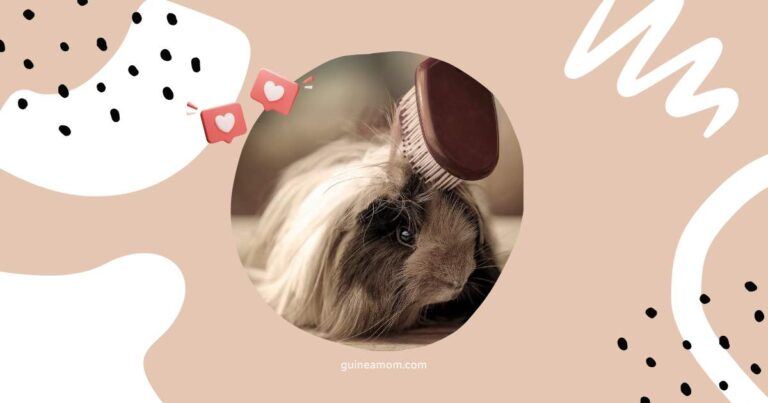
Coat length. This is the biggest difference of all. Short-haired breeds are low-maintenance; long-haired breeds need daily care; hairless breeds need none of the brushing but special skin care instead.
Coat texture. Some coats are smooth and sleek, others dense and wiry (a plush, teddy-bear feel), others curly, and others grow in swirling rosettes. Texture is a major part of what makes each breed look distinct.
Coat structure. Features like rosettes (swirls radiating from a point) and crests (a single rosette “crown” on the head) set certain breeds apart structurally, regardless of length.
Color and markings. Across all breeds you’ll find selfs (solids), agoutis, roans, tortoiseshells, Dutch patterns, Himalayan points, and more — a whole dimension of difference layered on top of coat type.
Grooming and care needs. Flowing from all the above, the practical workload differs enormously — and for most owners, this is the difference that matters most day to day.
The Differences That Don’t Really Exist
Just as important — and often overlooked — is how similar guinea pig breeds are beneath their coats. Several things you might expect to differ by breed actually don’t:
- Body size and build. Unlike dogs, pet guinea pig breeds are all roughly similar in size and shape; there are no “giant” or “toy” pet breeds. (Larger meat breeds exist, but those aren’t the pet breeds.)
- Lifespan. Guinea pigs generally live a comparable number of years regardless of breed.
- Diet and basic care. Every breed needs the same foundation: unlimited hay, daily vitamin C, fresh vegetables, water, space, and a clean home.
- Social needs. All breeds are herd animals that need the companionship of their own kind.
- Temperament. This is the big myth-buster. A pig’s personality depends far more on the individual and how it’s socialized than on its breed — so no breed is reliably “cuddlier” or “friendlier” than another.
In other words, choosing a breed mostly means choosing a look and a grooming commitment, not a different kind of animal.
Comparing Breeds by Maintenance Level
Since grooming is the difference that affects owners most, here’s a practical way to compare the breeds — by how much upkeep they need.
| Maintenance level | Example breeds | What’s involved |
| Low | American (English), Teddy, Rex, Himalayan, White Crested | Occasional brushing; easy short coats; great for beginners |
| Medium | Abyssinian | Regular brushing to keep rosettes neat and clean |
| High | Peruvian, Silkie, Texel, Coronet, Sheba, Alpaca, Merino | Daily brushing, regular trimming, extra rear-end hygiene |
| Special care | Skinny Pig, Baldwin (hairless) | No brushing, but warmth, sun protection, and skin care |
(Every breed also needs universal care — nail trims, hygiene checks, and a hay-based diet — on top of the above.)
This comparison is often the most useful one for choosing: it cuts through the looks and tells you what you’re actually signing up for.
How to Tell Look-Alike Breeds Apart
Some breeds are easily confused with one another. Here’s how to spot the differences between the common mix-ups.
Silkie vs. Peruvian (the long, straight-haired breeds). Both have long, flowing coats, but the giveaway is the direction of the hair. The Peruvian’s hair grows forward, over the face (often making it hard to tell which end is which!), while the Silkie’s sweeps back away from the face, giving a smooth teardrop shape from above.
Teddy vs. Rex (the dense, wiry breeds). These look very similar — both have short, dense, plush coats that stand off the body — but they’re generally considered distinct breeds caused by different genes. The Teddy is also known for its cute upturned nose. To the eye they’re close cousins; genetically they got there by different routes.
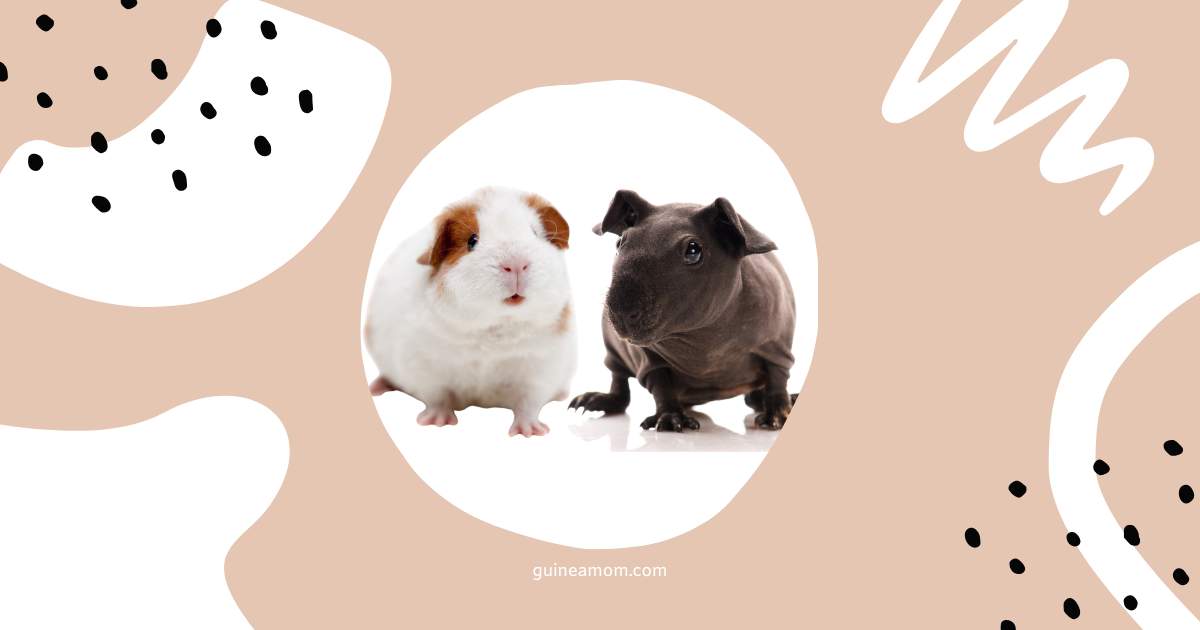
Skinny Pig vs. Baldwin (the hairless breeds). Both are hairless, but they get there differently. The Skinny Pig is nearly hairless from birth (keeping a little fuzz on nose and feet), while the Baldwin is typically born with a coat and then loses it as it grows. They also stem from two separate genetic mutations.
American vs. White Crested (the smooth, short-haired breeds). Both are sleek and short-coated, but the White Crested has one distinguishing feature: a single white rosette or “crest” on the forehead, like a little crown, which the plain American lacks.
Abyssinian vs. Sheba (the rosetted breeds). The Abyssinian has short hair arranged in neat rosettes for a spiky look, while the Sheba combines rosettes with longer, tousled hair for that charmingly messy “bad hair day” appearance.
So Which Differences Should Guide Your Choice?
Put it all together, and choosing between breeds gets refreshingly simple. Because size, lifespan, care basics, social needs, and temperament are essentially the same across breeds, the differences that should actually guide your decision are:
- How much grooming you can commit to — the single most practical factor. Short-haired for low effort; long-haired only if you’ll truly keep up with daily care; hairless only if you can meet their special needs.
- The look you love — coat type, color, and markings, which are purely a matter of personal taste.
- The individual pig’s temperament — meet the pig if you can, since this matters more than breed.
Everything else, your guinea pig will need in equal measure no matter which breed you choose. And whatever the breed, adopting a calm, already-socialized pig (in a bonded pair) from a rescue is a wonderful option.
Key Takeaways
- Breed differences are almost all about the coat — length, texture, structure, and color — plus the grooming and care that follow.
- Many things don’t differ by breed — size, lifespan, diet, social needs, basic care, and (crucially) temperament are essentially the same across breeds.
- Compare breeds by maintenance level — low (American, Teddy, Rex), medium (Abyssinian), high (Peruvian, Silkie, Texel, and other long-haired), and special-care (hairless).
- Tell look-alikes apart by key features — hair direction (Silkie vs. Peruvian), genetics and nose (Teddy vs. Rex), birth coat (Skinny vs. Baldwin), and crests (American vs. White Crested).
- Temperament is individual, not breed-based — no breed is reliably friendlier than another.
- Let grooming commitment and personal taste guide your choice — and meet the individual pig, since personality matters most.
- Consider adopting a calm, socialized pig (as a bonded pair) whatever breed appeals to you.
This article is intended as general educational information for guinea pig owners. Breed standards and classifications vary between regions and associations, and some breed distinctions are debated. For care guidance — especially for long-haired or hairless breeds — consult a qualified veterinarian.