How Long Do Different Guinea Pig Breeds Live?
Whether breed really affects lifespan — and the honest answer about what matters more.
Here’s the honest truth that many “lifespan by breed” articles skip: guinea pig breeds don’t differ in lifespan nearly as much as people think. Across the board, most breeds live around 5 to 7 years (with a wider range of about 4 to 8), and the reliable sources agree that genetics and quality of care matter far more than breed. You’ll find per-breed figures online — and we’ll share the commonly-cited ranges below — but they overlap heavily and actually conflict between sources, especially for hairless breeds. Where breed genuinely can influence lifespan is through breed-linked health predispositions (like the bone disease Satin pigs are prone to, or the extra vulnerabilities of hairless breeds), not through some built-in “this breed lives X years” rule. So choose a breed for how well its care suits you — not for longevity.
Do Different Breeds Really Live Different Lengths?
It’s a natural question, and the internet is full of confident breed-by-breed lifespan numbers. But when you look across reputable sources, two things become clear.
First, the figures don’t agree. One source will claim hairless breeds live the shortest lives; another puts them at a healthy seven to eight years. One says long-haired Peruvians are among the longest-lived; another (a vet-reviewed source) suggests long-haired breeds average the fewest years. When the “data” points in opposite directions, it’s a sign there isn’t a strong, consistent breed effect to report.
Second, the experts largely agree that breed is a minor factor. Most authoritative sources state that all breeds have broadly similar average lifespans of around 5 to 7 years, that purebred and mixed-breed pigs live similar lengths, and that individual genetics and care quality have a far greater impact on longevity than breed. In other words, you shouldn’t pick a breed based on how long it’ll live.
So while we can share the commonly-cited ranges, please read them as rough, overlapping approximations — not precise predictions.
Commonly Cited Lifespan Ranges by Breed
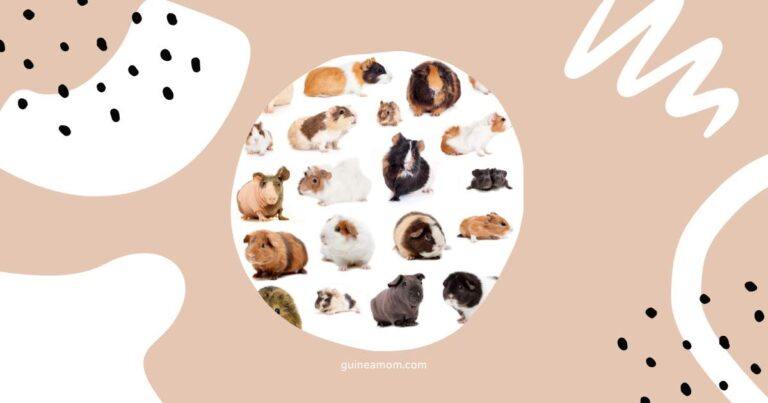
With that big caveat firmly in mind, here are the lifespan ranges you’ll typically see quoted for popular breeds. Notice how much they overlap — they all cluster around the same general 5-to-7-year window.
- American (English): roughly 4–7 years. The classic short-haired breed and one of the most common pets.
- Abyssinian: roughly 5–7 years (some live to 8 or beyond). Its rosetted coat needs regular grooming to stay healthy.
- Peruvian: roughly 5–8 years. Often cited among the longer-lived breeds, though its long coat demands daily care.
- Silkie (Sheltie): roughly 5–8 years. Another long-haired breed sometimes grouped with the longer-lived.
- Himalayan: roughly 5–8 years. A short-coated, color-pointed breed.
- Teddy: roughly 4–7 years. Dense, easy-care coat; may be prone to dry skin.
- Texel: roughly 5–7 years. Curly coat that needs diligent grooming to prevent skin problems.
- Hairless breeds (Skinny Pig, Baldwin): genuinely disputed. Some sources cite 7–8 years, while others consider them more vulnerable and shorter-lived due to their special care needs. The honest answer is that their longevity depends heavily on how well their environmental and skin needs are met.
Look at that list as a whole and the real lesson jumps out: nearly every breed lands in the same 5-to-7-year ballpark. The differences are small, uncertain, and easily outweighed by care.
Where Breed Can Genuinely Affect Lifespan
If breed itself doesn’t set a lifespan clock, how can it matter? The honest answer is through breed-linked health predispositions and care demands — not an inherent lifespan. A few real examples:
Satin-coated pigs (a glossy coat variety found across several breeds) are predisposed to a serious bone disease called osteodystrophy, which can affect health and longevity. This is a genuine, well-recognized breed-linked concern.
Hairless breeds (Skinny Pig, Baldwin) lack a protective coat, making them more sensitive to temperature, more exposed to skin problems, and sometimes more vulnerable overall. Their lifespan depends heavily on attentive, specialized care.
Long-haired and rosetted breeds (Peruvian, Silkie, Texel, Abyssinian) aren’t inherently shorter-lived, but their coats can trap dirt and moisture and hide skin problems, so neglected grooming can lead to hygiene-related issues — and conscientious grooming keeps them healthy.
The pattern is clear: breed affects health risk and care needs, and those affect lifespan — which means good care can largely level the playing field.
What Matters Far More Than Breed
Since breed is a minor factor, where should your attention go? To the things that genuinely determine how long a guinea pig lives — most of which you control:
- Genetics. The single biggest natural factor, varying by individual far more than by breed, and shaped by responsible breeding.
- Diet. A hay-based diet with daily fresh vegetables and essential vitamin C (which guinea pigs can’t make themselves) is foundational.
- Housing and environment. A spacious, clean, safe, temperature-stable home (indoors is usually best) supports a longer life.
- Companionship. Guinea pigs are social herd animals; loneliness causes chronic stress, so keeping a compatible pair or group helps.
- Veterinary care. Regular check-ups with a guinea-pig-savvy vet catch hidden illness early — guinea pigs are experts at hiding it.
- Weight and exercise. A healthy weight and room to move protect long-term health.
Get these right, and a guinea pig of any breed has its best shot at a long, healthy life — potentially well beyond the average, and in exceptional cases (with care and luck) into the double digits.
So, Should You Choose a Breed for Longevity?
No — and that’s the practical bottom line. Because the lifespan differences between breeds are small, uncertain, and overshadowed by care, breed isn’t a sensible basis for choosing a pig if your goal is a long life together.
Instead, choose a breed whose care needs and looks suit you — a low-maintenance short-haired breed if you want easy grooming, a long-haired or hairless breed only if you can meet their greater needs — and then focus your energy on the care that actually extends life. And whatever breed appeals to you, consider adopting from a rescue, where you can give a deserving pig (of any breed or mix) a long, happy home.
Key Takeaways
- Breeds don’t differ much in lifespan — nearly all live around 5–7 years (with a 4–8 year range), and online per-breed figures overlap heavily and often conflict.
- Care and genetics matter far more than breed, and purebred and mixed-breed pigs live similar lengths.
- Commonly cited ranges put most breeds in the same 5-to-7-year ballpark; hairless breeds’ longevity is genuinely disputed and care-dependent.
- Where breed can matter is health predispositions — Satin pigs’ bone disease, hairless breeds’ vulnerabilities, and long-haired breeds’ grooming-related risks — not an inherent lifespan.
- The real longevity factors are genetics, diet (with daily vitamin C), housing, companionship, vet care, and a healthy weight.
- Don’t choose a breed for longevity — choose for care-fit and looks, then maximize lifespan through excellent care.
- Consider adopting a pig of any breed or mix and giving it a long, loving home.
This article is intended as general educational information for guinea pig owners and is not a substitute for professional veterinary advice. Lifespan figures are approximate averages that vary widely by individual and source; for guidance on your guinea pig’s health and longevity, consult a qualified veterinarian.