Guinea Pig Diet Tips
Practical feeding habits that keep your piggy healthy — the how, not just the what
Feeding a guinea pig well is less about any single “superfood” and more about good daily habits. The essentials: make unlimited grass hay the foundation of every day, offer a daily portion of varied fresh vegetables, provide a small measured amount of plain pellets, and keep fresh water available at all times. Beyond that, the habits that make the biggest difference are ensuring daily vitamin C (guinea pigs can’t make their own), introducing new foods gradually, rotating vegetables for variety, watching portion sizes, keeping treats and sugary foods occasional, and monitoring your pig’s weight and appetite so you catch problems early. Get these routines right and you’ll prevent a huge range of diet-related health issues — and have a happy, well-fed piggy.
Tip 1: Make Hay the Foundation — Always
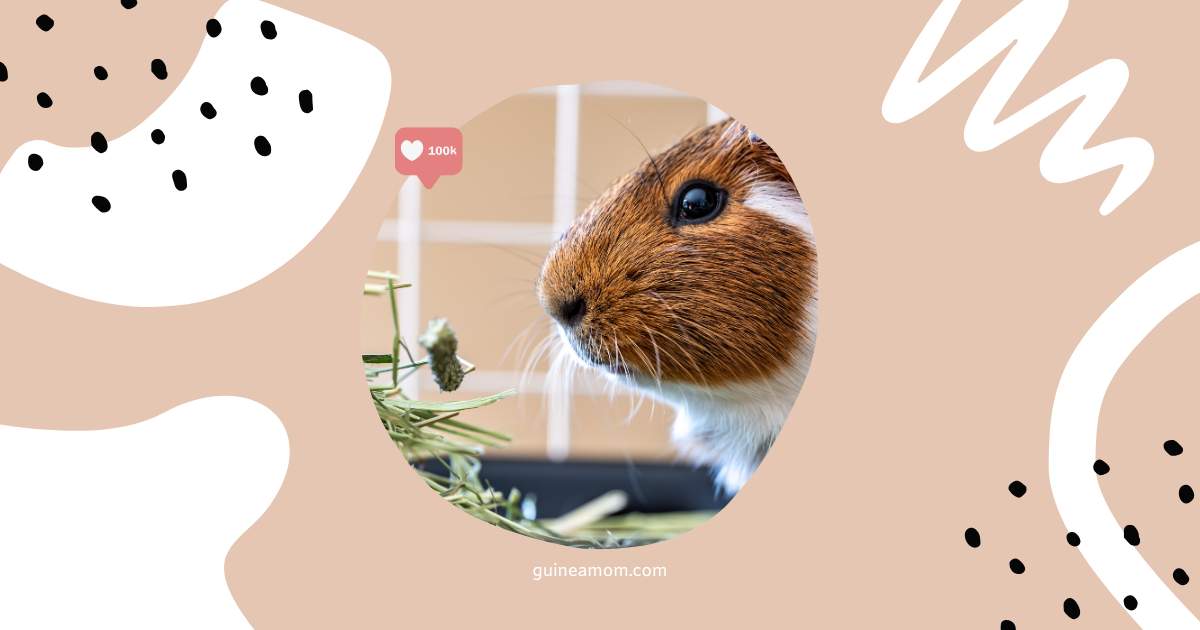
If there’s one habit that matters above all others, it’s keeping grass hay available 24 hours a day. Hay should make up the large majority of your guinea pig’s diet, and it’s never something to ration.
Hay does two essential jobs: the constant chewing wears down your pig’s ever-growing teeth, preventing painful dental problems, and the high fiber keeps their digestive system moving, warding off the dangerous slowdowns guinea pigs are prone to. Choose a grass hay like Timothy, orchard, or meadow for healthy adults, and keep it fresh and dry. If your pig ever seems to be eating less hay, take note — it’s often an early sign something’s wrong.
Tip 2: Feed Fresh Vegetables Daily — and Vary Them
Fresh vegetables are the daily supplement to hay, providing vitamins, moisture, and welcome variety. A rough guide is about one cup of veg per pig per day, built mostly from low-sugar, low-calcium options like bell pepper, leafy lettuces, cucumber, and herbs.
The key habit here is variety through rotation. Rather than feeding the same vegetable every day, rotate several through the week. This gives a broader range of nutrients, helps balance things like calcium intake, and keeps mealtimes interesting for your pig. Think of the daily veg portion as a small, changing salad rather than a fixed menu.
Tip 3: Don’t Forget Daily Vitamin C
This is the habit that’s unique to guinea pigs. Unlike most animals, they can’t produce their own vitamin C and need it from their diet every single day — without enough, they develop scurvy.
Build vitamin C in naturally through vitamin-C-rich vegetables (bell peppers are the standout) and a quality pellet fortified with stabilized vitamin C. It’s best to avoid relying on vitamin C drops added to the water, as they degrade quickly and can make the water taste off, causing your pig to drink less. Getting vitamin C through fresh food and good pellets is the more reliable approach.
Tip 4: Use Pellets as a Supplement, Not a Meal
Pellets help fill nutritional gaps and provide a consistent vitamin C source, but they’re a supplement — not the main event. A small daily portion, around an eighth of a cup per pig, is plenty.
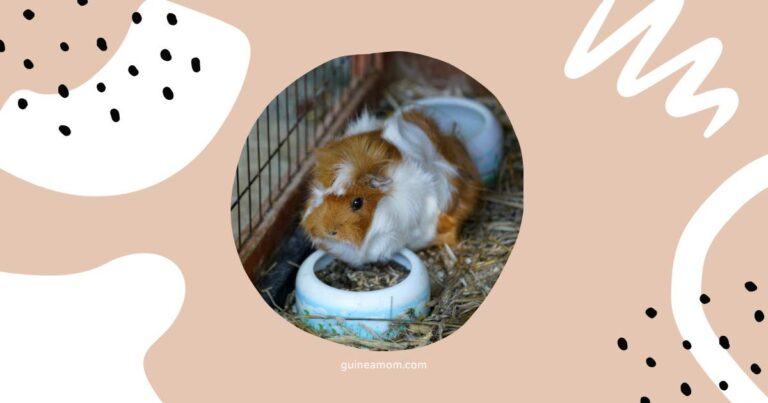
Two habits matter here. First, choose a plain, Timothy-based pellet rather than a colorful “muesli” mix with seeds, corn, and dried fruit, since pigs pick out the sugary bits of muesli and leave the healthy parts. Second, measure the portion rather than free-feeding, since unlimited pellets are a common cause of weight gain. Let hay and veg do the heavy lifting, with pellets as a modest top-up.
Tip 5: Always Provide Fresh, Clean Water
It’s easy to overlook, but constant access to fresh water is just as important as the food. Check and refresh the water daily, even if the bottle still looks full, and clean the bottle or bowl regularly to prevent biofilm and algae.
A useful habit is to check each day that a water bottle’s sipper tube is actually flowing — they can clog or airlock without obvious signs, leaving a pig unable to drink. Many owners offer both a bottle and a bowl as a backup. Good hydration supports digestion, urinary health, and overall wellbeing.
Tip 6: Introduce New Foods Gradually
A guinea pig’s digestive system is delicate and doesn’t like sudden change. Whenever you add a new food, introduce it slowly — a small amount of one new item at a time — and watch for any soft stools or signs of tummy upset before offering more or adding something else.
This gentle approach lets you spot foods that don’t agree with your particular pig and protects their gut from the upset that abrupt changes can cause. The same principle applies to bigger dietary shifts, like changing pellet brands: transition over several days rather than all at once.
Tip 7: Keep Treats and Sugary Foods Occasional
Treats are a lovely part of guinea pig life, but the habit to build is moderation. Fruit, in particular, is high in sugar and should be a small, occasional treat rather than a daily food — think a single berry or a thin slice a few times a week.
Steer clear of sugary commercial treats like yogurt drops and honey sticks, which are genuinely bad for pigs, and skip human snacks entirely. The healthiest treats are simply small portions of fresh veg and herbs. Keeping the sweet stuff occasional protects your pig from weight gain, digestive upset, and fussy eating.
Tip 8: Watch the Calcium
Guinea pigs are prone to bladder stones and sludge, and excess calcium is a contributing factor. This doesn’t mean avoiding nutritious greens — it means balancing them.
The practical habit is to feed higher-calcium foods (like spinach, kale, and parsley) in smaller amounts and rotate them with lower-calcium options like bell pepper and leaf lettuce, rather than serving them in large quantities every day. For adult pigs, also stick to grass hay rather than high-calcium alfalfa, which is better suited to babies and pregnant or nursing sows.
Tip 9: Mind Portions and Wash Produce
A few small habits keep feeding safe and tidy. Wash all fresh produce thoroughly to remove pesticides and dirt before offering it. Serve fresh food fresh, and remove any uneaten vegetables after a few hours so they don’t spoil in the cage. And keep an eye on overall portions — generous hay, a sensible veg portion, measured pellets, and modest treats — so your pig stays at a healthy weight.
These little routines prevent both spoilage-related illness and the gradual creep toward an unbalanced, fattening diet.
Tip 10: Monitor Weight and Appetite
Finally, the habit that ties everything together: pay attention to how much your pig eats and weigh them regularly. A weekly weigh-in on a kitchen scale is one of the best early-warning tools you have, since a drop in weight or appetite is often the first sign of a health problem.
Knowing your pig’s normal — how much hay they get through, what their droppings look like, how eagerly they eat — means you’ll quickly notice when something’s off. And because a guinea pig that stops eating can decline fast, any sudden loss of appetite is a reason to contact your vet promptly.
A Note on Life Stages
Most of this guidance applies to healthy adult guinea pigs, but needs shift a little across life stages. Baby, pregnant, and nursing pigs have higher calcium and protein needs and may benefit from alfalfa hay, while senior pigs or those with health conditions sometimes need diet adjustments. When in doubt — especially for very young, pregnant, elderly, or unwell pigs — it’s worth checking in with your vet to tailor the diet appropriately.
Key Takeaways
- Hay is the foundation — unlimited grass hay, available 24/7, supports both dental and digestive health.
- Feed varied fresh veg daily — about a cup per pig, rotated through the week for balanced nutrition.
- Daily vitamin C is essential, since guinea pigs can’t make their own; get it from veg (especially bell pepper) and fortified pellets.
- Pellets are a small supplement — a measured portion of plain Timothy-based pellets, not free-fed muesli mixes.
- Keep fresh water available and check that bottles are actually flowing.
- Introduce new foods slowly to protect a delicate digestive system.
- Keep treats and sugary foods occasional, and avoid sugary commercial treats and human snacks.
- Balance calcium to reduce bladder-stone risk, and monitor weight and appetite weekly to catch problems early.
This article is intended as general educational information for guinea pig owners and is not a substitute for professional veterinary advice. For tailored dietary guidance — especially for young, pregnant, senior, or unwell guinea pigs — please consult a qualified veterinarian.