How To Manage Overweight Guinea Pigs Through Diet
A safe, gradual approach to helping a chunky piggy slim down — without ever putting their health at risk
Helping an overweight guinea pig get back to a healthy weight is mostly about fixing the diet’s balance, not cutting the amount of food. The single most important rule: never restrict hay or starve your pig — guinea pigs must eat constantly, and rapid weight loss or skipped meals can cause life-threatening problems. Instead, you keep unlimited grass hay available, cut back on calorie-dense pellets to a measured portion, eliminate sugary treats and fruit, choose low-sugar vegetables, and encourage more activity. The goal is slow, steady weight loss over weeks and months — not a crash diet. And before you start, it’s worth a vet check to confirm your pig really is overweight (and not, say, pregnant or retaining fluid) and to agree on a sensible target.
Why a Healthy Weight Matters
Carrying extra weight isn’t just a cosmetic issue for guinea pigs — it genuinely affects their health and comfort.
Excess weight puts pressure on the feet, raising the risk of bumblefoot (painful sores on the footpads). It strains the heart and joints, makes movement harder, and can shorten lifespan. Overweight pigs also struggle to groom themselves properly, especially around the rear end, which can lead to hygiene problems and, in warm weather, a serious risk of flystrike. And if your pig ever needs surgery, obesity increases the risks of anesthesia.
In short, getting your piggy to a healthy weight is one of the kindest, most protective things you can do for their long-term wellbeing.
How to Tell If Your Guinea Pig Is Overweight
The number on the scale matters less than you might think, because healthy weights vary a lot between individuals and body types. As a rough guide, adult boars often weigh around 900–1,200 g and sows around 700–900 g, but a small-framed pig and a large-framed pig can both be perfectly healthy at very different weights.
The more reliable method is a hands-on body condition check:
- Feel along the ribs and spine. In a healthy pig, you should be able to feel the ribs with a light covering of flesh — a bit like the back of your hand. If the ribs are hard to find under a thick layer, your pig is likely carrying too much weight.
- Check the overall shape. A pig that looks like a rounded pear, with no sense of the hip bones and visible rolls, is probably overweight. A very bony pig with sharply prominent ribs and hips is underweight.
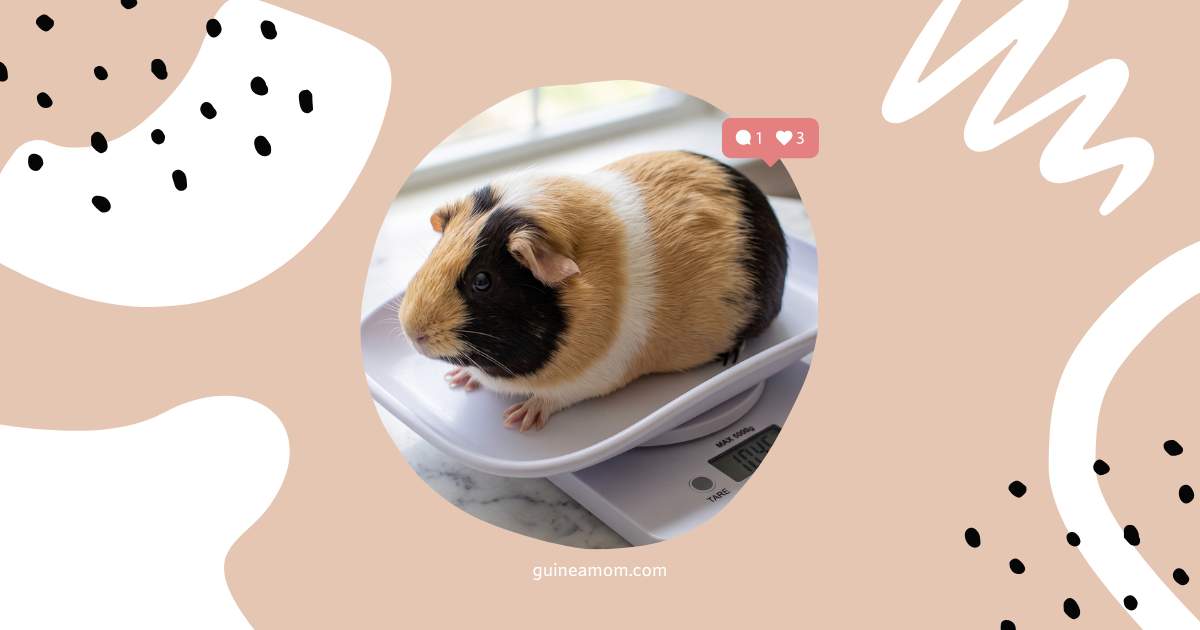
- Weigh regularly and track the trend. Weekly weigh-ins on a kitchen scale tell you far more over time than any single reading.
If you’re unsure, a vet can assess body condition properly and rule out other causes of a “fat” appearance, such as pregnancy, bloat, fluid retention, or ovarian cysts in females — all of which need different handling.
The Golden Rule: Slow and Steady, Never Starve
Before any diet changes, this point is so important it deserves its own section: a guinea pig must never be put on a crash diet or have food withheld.
Guinea pigs need to eat almost constantly to keep their digestive system moving. If a pig stops eating — even for a day — it can develop dangerous gut stasis. And rapid weight loss can trigger a serious condition called hepatic lipidosis (fatty liver), which can be fatal. So “managing weight through diet” never means feeding less overall or skipping meals. It means improving the quality and balance of what your pig eats while keeping the food volume up through unlimited hay.
Aim for gradual change. Healthy weight loss in a guinea pig happens over weeks and months, not days.
Step-by-Step: Adjusting the Diet
1. Keep hay unlimited — always
This is the foundation of a weight-loss diet, which surprises some owners. Grass hay (Timothy, orchard, or meadow) is low in calories but high in fiber, so it fills your pig up, satisfies their need to chew and graze, and keeps digestion healthy — all without piling on weight. Your overweight pig should still have hay available 24/7. If anything, you want them eating more hay and less of everything else.
2. Measure and reduce pellets
Pellets are calorie-dense, and free-feeding them (leaving a full bowl out all the time) is one of the most common causes of weight gain. Switch to a measured portion — generally around an eighth of a cup per pig per day — given once a day rather than topped up endlessly. For an overweight pig, your vet may suggest trimming this further while keeping hay unlimited.
3. Ditch the muesli mixes
If you’re feeding a colorful “muesli” style mix with seeds, corn, dried fruit, and pellets all together, switch to a plain, Timothy-based pellet. Pigs pick the sugary, fatty bits out of muesli mixes and leave the healthy parts, which is a recipe for both weight gain and nutritional imbalance.
4. Cut out fruit and sugary treats
Fruit is high in sugar, and commercial guinea pig “treats” (yogurt drops, honey sticks, sugary snacks) are often worse. For a pig that needs to lose weight, it’s best to pause fruit entirely for a while and eliminate sugary treats altogether. You can still bond through a sprig of herbs or a slice of bell pepper, which are healthy and just as appreciated.
5. Choose low-sugar, low-calorie vegetables
Keep the daily fresh-veg portion built around lower-sugar options like leafy lettuces, bell peppers, cucumber, and herbs. Go easy on starchy or sugary vegetables — carrots, for example, are higher in sugar than many owners realize, so treat them as an occasional extra rather than a daily staple.
6. Eliminate human and processed foods
Bread, crackers, cereal, and any human snacks have no place in a guinea pig’s diet and are especially counterproductive for an overweight pig. Their digestive systems are built strictly for fiber-rich plant material.
7. Feed multiple pigs thoughtfully
If you have more than one pig and only one is overweight, a greedy or dominant pig may be hogging the pellets. Feeding them in separate spots (or briefly separating them at pellet time) can make sure each pig gets the right amount.
Don’t Forget Exercise
Diet does the heavy lifting, but activity helps too — and it makes your pig happier in the process.
Give your piggy plenty of space and regular floor time in a safe, secure area to trot around and explore. Encourage natural foraging by scattering a little hay or hiding healthy veg around their space so they have to move to find it. Tunnels, hidey-houses, and a varied environment all encourage movement. A cramped cage is a common, often-overlooked contributor to weight gain, so making sure the living space is generously sized pays off for both fitness and general wellbeing.
Tracking Progress (and When to Check with a Vet)
Weigh your guinea pig once a week, at roughly the same time, and keep a simple log. You’re looking for a slow, steady downward trend — not a dramatic drop. If the weight is falling too fast, or your pig seems off in any way, ease up and consult your vet.
It’s also wise to involve a vet from the start if your pig is significantly overweight, isn’t responding to diet changes, or has any other health concerns. A vet can set a realistic target weight, rule out underlying medical causes, and make sure your approach is safe. Remember that any sudden refusal to eat, drop in droppings, or lethargy means stopping the diet plan and seeking help — keeping your pig eating always comes first.
Key Takeaways
- Balance, not starvation. Managing weight means improving the quality of the diet, never withholding food or crash-dieting.
- Hay stays unlimited. Low-calorie, high-fiber grass hay should always be available — it fills your pig up safely and keeps digestion healthy.
- Pellets are the usual culprit. Switch from free-feeding and muesli mixes to a small, measured portion of plain Timothy-based pellets.
- Cut the sugar. Pause fruit and eliminate sugary treats and processed human foods while your pig slims down.
- Choose low-sugar veggies like leaf lettuce, bell pepper, cucumber, and herbs, and go easy on sugary ones like carrots.
- Add gentle activity through floor time, foraging, enrichment, and a generously sized cage.
- Go slow and track it. Healthy weight loss happens over weeks and months; weigh weekly and watch for a gentle downward trend.
- Loop in your vet. Get a body-condition assessment and target weight, rule out other causes, and always prioritize keeping your pig eating.
This article is intended as general educational information for guinea pig owners and is not a substitute for professional veterinary advice. Before starting any weight-management plan, please consult a qualified veterinarian to ensure it’s safe and appropriate for your individual guinea pig.