Guinea Pig Grooming And Bathing
A practical how-to guide — brushing, nails, hygiene, and how (and how rarely) to bathe your piggy.
Grooming keeps your guinea pig healthy, comfortable, and clean — and it’s also your best chance to spot health problems early. The core grooming tasks are brushing (frequency depends on coat length), nail trimming (roughly every few weeks), rear-end hygiene checks, grease-gland care, and a quick health once-over of eyes, ears, teeth, feet, and skin. As for bathing: here’s the key thing — guinea pigs rarely need baths and shouldn’t be bathed routinely. They keep themselves clean, and over-bathing dries their skin and stresses them. Bathe only when there’s a genuine reason (significant soiling or on a vet’s advice), using a guinea-pig-safe shampoo, shallow warm water, and thorough drying to prevent chilling. Below is a practical how-to for each task.
Why Grooming Matters (and Bathing Usually Doesn’t)
Regular grooming does more than keep your pig looking tidy. It prevents matting and hygiene problems, keeps nails and skin healthy, and — crucially — gives you a regular, hands-on chance to notice changes (lumps, parasites, weight loss, sore feet) before they become serious. In a prey animal that hides illness, that early-warning role is genuinely valuable.
Bathing, by contrast, is something many owners do too often. Guinea pigs are naturally clean animals that groom themselves, and frequent baths strip the natural oils from their skin, leaving it dry and irritated — not to mention the stress and chilling risk a bath involves. So the golden rule is: groom regularly, bathe rarely. Let’s go through the grooming routine first, then cover bathing.
Brushing
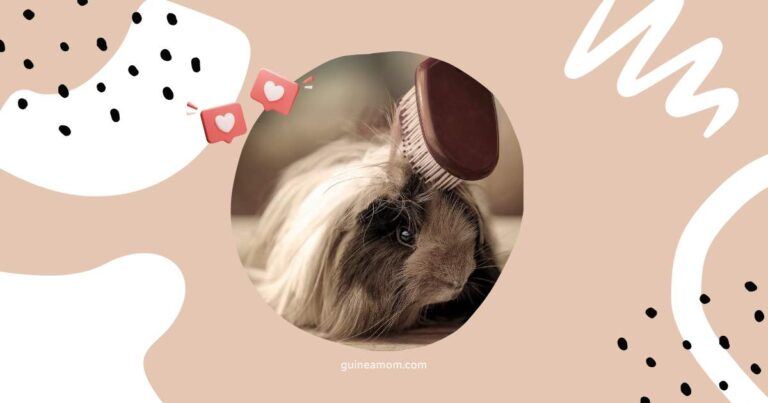
How much brushing your pig needs depends entirely on their coat. Short-haired pigs (like the American, Teddy, or Rex) need only an occasional gentle brush to remove loose hair. Long-haired pigs (Peruvian, Silkie, Texel, and the like) need daily brushing to prevent the tangles and mats that can pull painfully on the skin, plus regular trimming to keep the coat manageable and clean. One important caution: never trim your guinea pig’s whiskers. They’re sensory organs your pig uses to navigate and judge gaps, so be careful around the face when trimming a long-haired coat. (Learn more: Why Do Guinea Pigs Have Whiskers?)
Use a soft brush or comb suited to the coat, work gently in the direction of hair growth, and be especially careful around mats — never yank them out. Ease tangles apart gently, or carefully trim them, and seek help for severe matting. Brushing is also a lovely bonding moment and a chance to check the skin underneath.
Nail Trimming
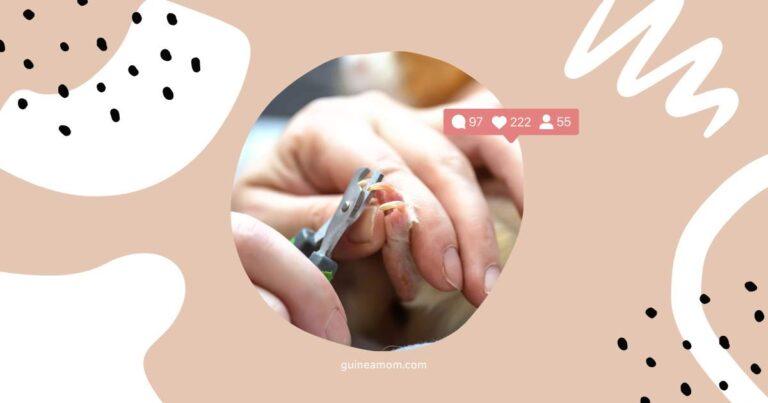
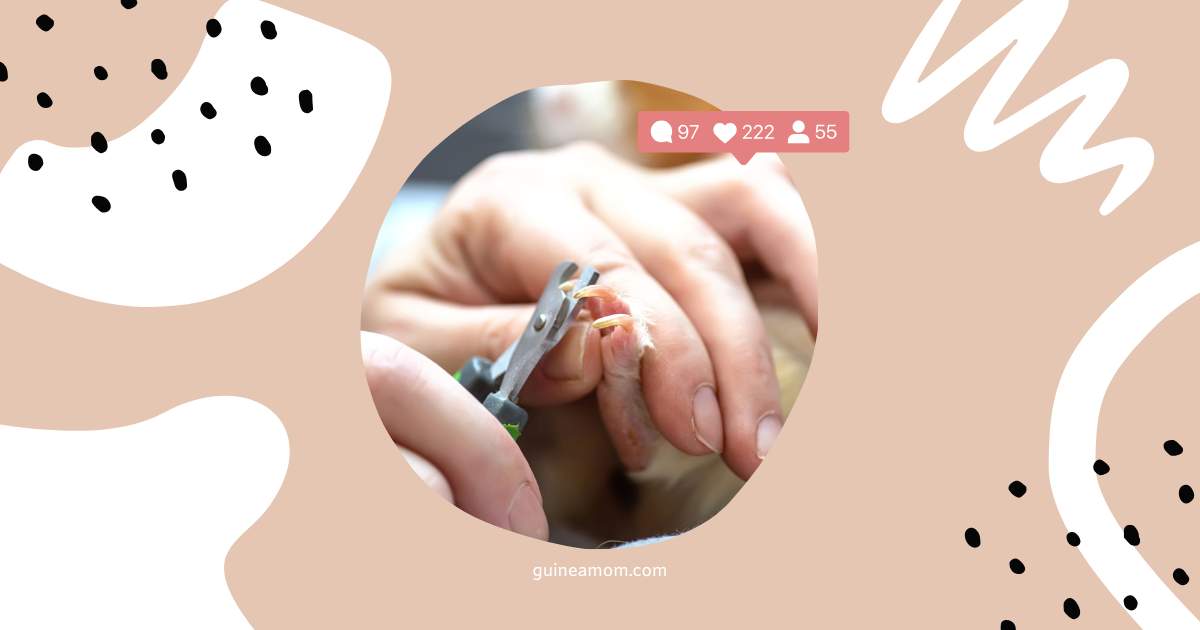
All guinea pigs’ nails grow continuously and need trimming regularly — roughly every few weeks, though it varies by pig. Overgrown nails can curl, snag, and cause discomfort or injury.
To trim safely: use proper small-animal nail clippers, hold your pig securely and calmly (many people find it easiest with the pig held against their body or with a helper), and trim only the tip, taking care to avoid the “quick” — the pink blood vessel inside the nail, which is visible in pale nails but hidden in dark ones (trim conservatively on dark nails). Trim a little at a time. If you’re nervous or your pig has dark nails, a vet or experienced groomer can do it or show you how.
Grease-Gland Care
Guinea pigs have a scent (grease) gland near their rear end, and some pigs — often boars — produce enough oily secretion that the area becomes greasy and benefits from occasional cleaning. It’s a normal part of grooming for many pigs.
To clean it, gently work a little guinea-pig-safe cleanser (or a small amount of a suitable degreasing product) into the greasy area, then wipe and rinse clean, being gentle with the surrounding skin. If the buildup is heavy, this is one of the occasional situations where a targeted clean (or a spot-bath of just that area) may be warranted.
Rear-End Hygiene
Checking your pig’s bottom regularly is important for every guinea pig, and especially for long-haired pigs, older boars, and overweight pigs. Make sure the area is clean and free of stuck droppings, soiling, or matted, soiled hair.
Older boars in particular can struggle to keep this area clean themselves and may need gentle help. Keeping the rear clean prevents discomfort, skin infection, and — especially in warm weather — the serious risk of flystrike. For long-haired pigs, trimming the hair around the rear makes this much easier to manage.
The Grooming Health Check
Every grooming session is a chance to check your pig over, so make it a habit. While you’re handling them, look at their eyes (bright and clear), ears (clean), teeth (not overgrown, no drooling), feet (no redness or sores that could signal bumblefoot), and skin and coat (no parasites, scabs, lumps, or bald patches). Note their weight and overall condition too. Catching problems early is one of grooming’s biggest benefits — for fancy-coated and plain pigs alike.
A Note on Bathing
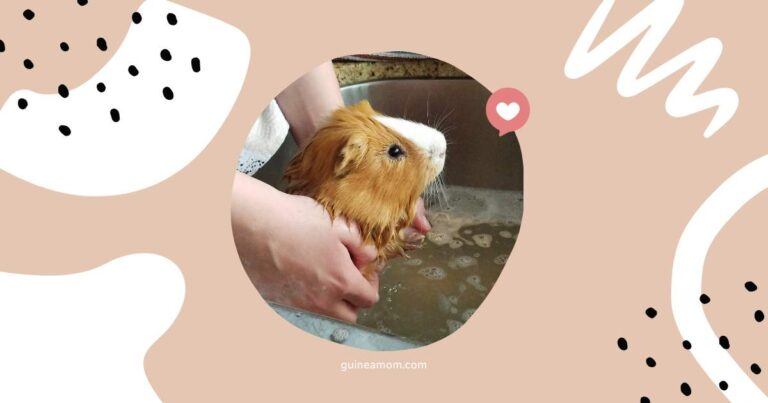
Now for bathing — and the headline is worth repeating: most guinea pigs rarely, if ever, need a bath. They self-clean, and over-bathing strips the natural oils from their skin, dries them out, and causes stress. So don’t bathe your pig “just because.”
A bath is only warranted for a genuine reason — significant soiling that brushing and spot-cleaning can’t resolve, heavy grease-gland buildup, or a medicated bath on your vet’s advice. Outside of situations like these, skip the bath and stick to brushing and spot-cleaning.
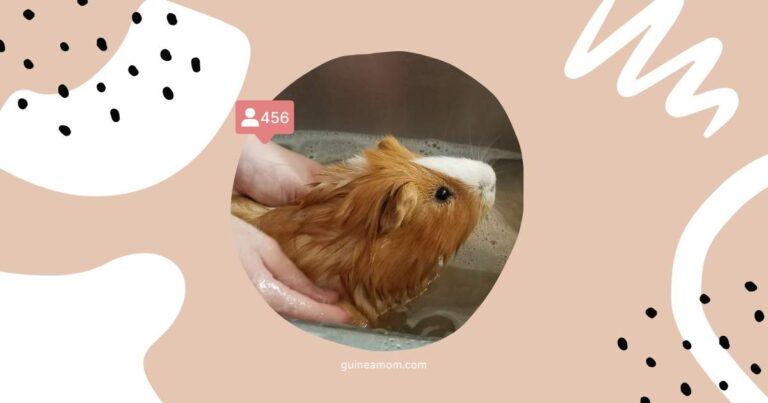
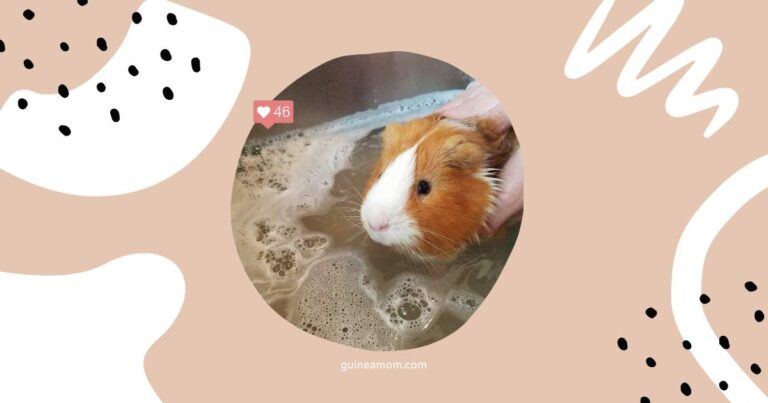
When a bath is genuinely necessary, the essentials are: use shallow, lukewarm water and a guinea-pig-safe shampoo, keep water away from the ears, eyes, and nose, work gently and quickly, rinse thoroughly, and — most importantly — dry your pig thoroughly and keep them warm afterward, since a damp guinea pig can chill dangerously. For the full step-by-step method, safe alternatives to a full bath, troubleshooting a nervous pig, and a bathing FAQ, see our complete guide: How to Bathe a Guinea Pig.
When to See a Vet or Groomer
Some grooming situations are best handled by a professional. Seek help for severe matting you can’t safely resolve, overgrown nails you’re not confident trimming (or dark nails where the quick is hard to see), signs of skin problems (flaking, sores, hair loss, parasites), persistent soiling that won’t stay clean, the special skin care of hairless breeds, or any lumps or abnormalities you find. There’s no shame in asking — it keeps your pig comfortable and safe.
Key Takeaways
- Groom regularly, bathe rarely — grooming keeps pigs healthy, but most guinea pigs rarely need baths.
- Brushing depends on coat — occasional for short-haired pigs, daily (plus trimming) for long-haired ones; never yank mats.
- Trim nails roughly every few weeks, taking only the tip and avoiding the quick; get help for dark nails.
- Care for the grease gland and rear end, especially in boars, long-haired, and overweight pigs, to prevent soiling and flystrike.
- Use grooming as a health check — eyes, ears, teeth, feet, skin, and weight.
- Bathe only when genuinely needed — significant soiling, grease buildup, or a vet-advised medicated bath — never routinely; for the full method see our dedicated How to Bathe a Guinea Pig guide.
- See a vet or groomer for severe matting, skin issues, difficult nail trims, or hairless-breed skin care.
This article is intended as general educational information for guinea pig owners and is not a substitute for professional veterinary advice. If you’re unsure how to trim nails, manage matting, bathe your pig, or care for a hairless breed’s skin — or which products are safe — please consult a qualified veterinarian or experienced groomer.