How To Clean A Guinea Pig Cage
A step-by-step cleaning guide — how often, what products are safe, and the routine that keeps things fresh.
Cleaning a guinea pig cage comes down to two routines: a quick daily spot-clean (5–10 minutes removing droppings and soiled bedding) and a full clean once or twice a week (emptying everything, washing the base, and replacing bedding). The best and safest cleaner is a simple 1:1 mix of distilled white vinegar and water — it’s natural, cheap, effective on urine, and completely guinea-pig-safe. Just as important is what to avoid: never use bleach, ammonia, or scented household cleaners, whose fumes are harmful to guinea pigs’ sensitive lungs. Always remove your pigs before cleaning, rinse well, and let everything dry completely before adding fresh bedding. Keeping the cage clean isn’t just about smell — it genuinely prevents respiratory, skin, and other illnesses. Here’s the full routine.
How Often Should You Clean a Guinea Pig Cage?
Here’s the schedule that keeps a guinea pig cage healthy and fresh:
- Daily — spot-clean. Remove droppings, soiled bedding, and leftover fresh food, and top up hay. Takes just 5–10 minutes. If you’re sensitive to odor or have several pigs, spot-clean twice a day.
- Every 2–4 days — bedding refresh (fleece users). If you use fleece liners, swap and wash them every 2–4 days (have two sets so one’s always ready).
- Weekly (or twice weekly) — full clean. Empty the cage completely, wash the base and sides, clean all accessories, and replace all bedding. This takes about 20–30 minutes.
- Weekly — wash food bowls and water bottles, scrubbing inside and out.
- Monthly — inspect the cage for damage, rust, sharp edges, or worn parts.
How often you need a full clean depends on how many guinea pigs you have, how big the cage is, and which bedding you use. Here’s a nice bonus of a big cage: the more space your pigs have, the less concentrated the mess — so a spacious cage plus daily spot-cleaning usually means less deep-cleaning work for you.
Why Cage Cleaning Matters
Cleaning isn’t just about keeping your home smelling nice — it’s a genuine health issue. A dirty cage lets ammonia build up from urine, which irritates guinea pigs’ very sensitive respiratory systems and can contribute to respiratory infections. Damp, soiled bedding also causes skin problems and the painful foot condition bumblefoot, and unhygienic conditions invite bacteria, fungi, and flies.
In short, a clean cage helps prevent a whole range of illnesses — so this routine is one of the most valuable things you do for your pigs.
What You’ll Need
- A safe cleaner — a spray bottle with 1:1 distilled white vinegar and water (or a pet-safe commercial small-animal cage cleaner)
- Cloths, paper towels, or a sponge
- A dustpan and brush, or a small handheld vacuum
- A scraper for stubborn dried-on spots
- Fresh bedding (or clean fleece liners)
- Unscented, hypoallergenic laundry detergent if you wash fleece
- A safe playpen or carrier for your pigs while you clean
The Daily Spot-Clean (5–10 Minutes)
This quick daily routine does more than anything else to keep the cage fresh:
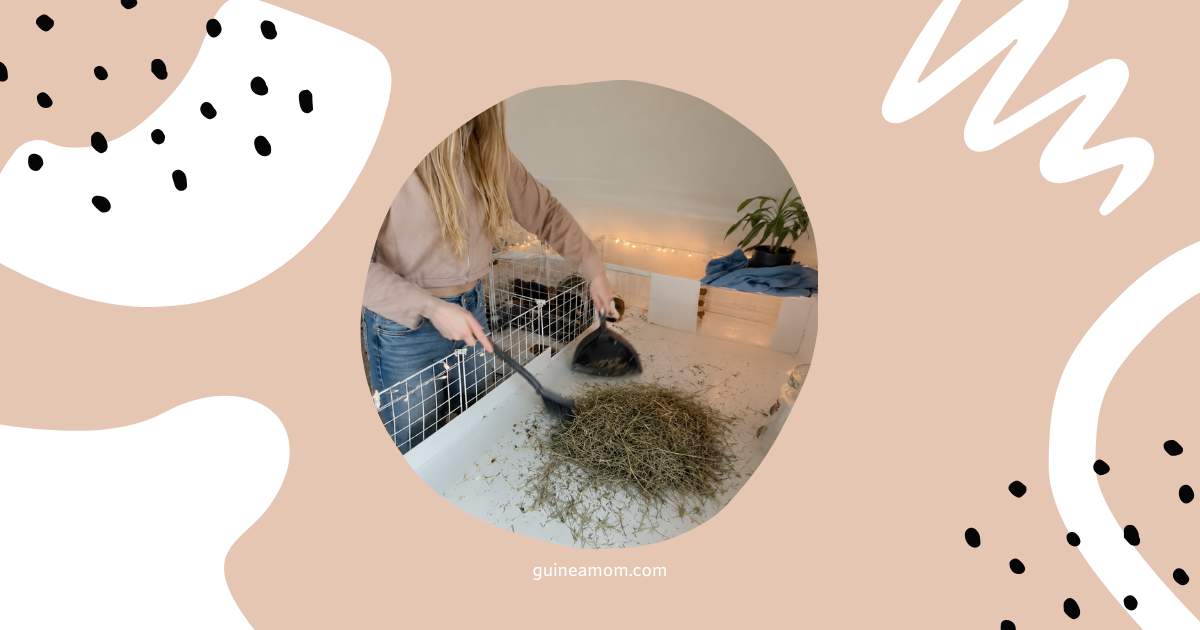
- Scoop or sweep up droppings — a dustpan and brush or a small handheld vacuum makes this fast. (With fleece, tilt or shake the liner so droppings gather in one spot, then vacuum or sweep them up.)
- Remove soiled, wet bedding, especially in your pigs’ favorite toilet corner, and replace with fresh.
- Remove uneaten fresh food — leftover veggies spoil quickly.
- Top up hay and check the water bottle is clean, full, and flowing.
- Wipe any obvious wet patches on the base.
Guinea pigs tend to toilet in one favorite area (often where they eat — their “kitchen”), so focus your daily effort there.
The Full Clean, Step by Step
Once or twice a week, do a complete clean:
1. Move your pigs somewhere safe. Pop them in a playpen or carrier with hay, water, and a hidey so they feel secure. Never clean with your pigs in the cage — the disturbance and any fumes aren’t good for them.
2. Empty the cage completely. Remove all bedding, hideys, toys, tunnels, bowls, water bottles, and leftover hay.
3. Dispose of the used bedding. Bag it up (or compost it, if you use paper, hemp, or wood bedding).
4. Sweep out debris. Use a dustpan and brush or vacuum to get loose hay and dust out of the base and corners.
5. Spray and wipe the base and sides. Spray your 1:1 vinegar-and-water solution over the base and sides, let it sit a couple of minutes, then wipe clean.
6. Tackle stubborn spots. For crusty, dried urine deposits, soak a cloth in undiluted white vinegar, lay it over the spot, and leave it for a while before scrubbing — it’ll lift off much more easily. A scraper helps too.
7. Rinse thoroughly. Rinse the base with clean water to remove any cleaner residue.
8. Dry completely. This step is essential — the cage must be fully dry before bedding goes back in, or you’ll trap dampness (which causes odor and mold).
9. Clean the accessories. Wash hideys, tunnels, toys, food bowls, and water bottles with hot soapy water or your vinegar solution, scrubbing bottles inside and out (a bottle brush helps), then rinse and dry.
10. Wash fabric items. Fleece liners, cuddle cups, and beds go in the machine with unscented, hypoallergenic detergent — and never fabric softener, which ruins fleece’s ability to wick moisture. Shake off loose hay and droppings first, and pre-soak stubborn liners.
11. Put it all back. Add fresh bedding, then return the (clean, dry) hideys, toys, hay, food, and water — and reunite your pigs with their sparkling home.
Safe Cleaning Products — and What to Avoid
This is the most important safety section, because some common household cleaners are genuinely dangerous to guinea pigs.
Safe to use:
- White vinegar and water (1:1) — the go-to choice. Natural, cheap, effective at breaking down urine and odor, and safe for guinea pigs (rinse afterward).
- Undiluted white vinegar — for soaking stubborn urine spots.
- Hot soapy water with a mild, unscented dish soap (rinse well).
- Pet-safe commercial small-animal cage cleaners.
- A veterinary disinfectant (such as F10) if you need genuine disinfection — for example after illness or a fungal problem. Ask your vet what to use if your pig has been unwell.
Never use:
- Bleach — harsh fumes, harmful to their airways.
- Ammonia-based cleaners — dangerous, and ammonia is already the problem chemical in urine.
- Scented or fragranced household cleaners and wipes — the perfumes irritate guinea pigs’ sensitive noses and lungs.
- Harsh chemical disinfectants not intended for pets.
- Air fresheners and scented sprays near the cage — never use these to mask odor; fix the cause instead.
The rule of thumb: if it has a strong chemical smell, it’s not suitable. And whatever you use, always rinse thoroughly and dry completely.
Tips to Make Cleaning Easier
- Use a litter tray in their favorite toilet corner, so most mess concentrates in one easily-emptied spot.
- Create a “kitchen” area — a designated tray or mat under the hay and food, since guinea pigs tend to eat and toilet in the same place. Clean this small area more often instead of the whole cage.
- Choose absorbent bedding — good bedding does half the work for you.
- Spot-clean daily without fail — it’s five minutes that saves you a much bigger job.
- Have two sets of fleece so one is always clean and ready.
- Leave a little of their scent behind — keeping a small amount of old bedding or a scented fleece piece means your pigs feel less need to re-mark the freshly cleaned cage.
- Bigger cage = easier cleaning — more space means less concentrated mess.
Key Takeaways
- Spot-clean daily (5–10 minutes) and do a full clean once or twice a week (20–30 minutes); wash bowls and bottles weekly and inspect the cage monthly.
- Cleaning is a health issue — a dirty cage causes ammonia build-up, respiratory illness, skin problems, and bumblefoot.
- Always remove your pigs first, and put them somewhere safe with hay, water, and a hidey.
- The best cleaner is 1:1 white vinegar and water — natural, effective, and guinea-pig-safe; use undiluted vinegar to soak stubborn urine spots.
- Never use bleach, ammonia, scented cleaners, or air fresheners — their fumes harm guinea pigs’ sensitive lungs.
- Always rinse thoroughly and dry completely before adding fresh bedding.
- Wash fleece with unscented detergent and never fabric softener, which ruins its wicking.
- Make it easier with a litter tray, a designated “kitchen” area, absorbent bedding, two fleece sets, and a bigger cage.
This article is intended as general educational information for guinea pig owners and is not a substitute for professional veterinary advice. If your guinea pig has been ill, ask your vet which disinfectant to use; if your pig shows signs of respiratory or skin problems, consult a qualified veterinarian experienced with guinea pigs.