Can Guinea Pigs And Cats Get Along?
Sometimes — but a cat is a predator and a guinea pig is prey, so it takes real caution and constant supervision.
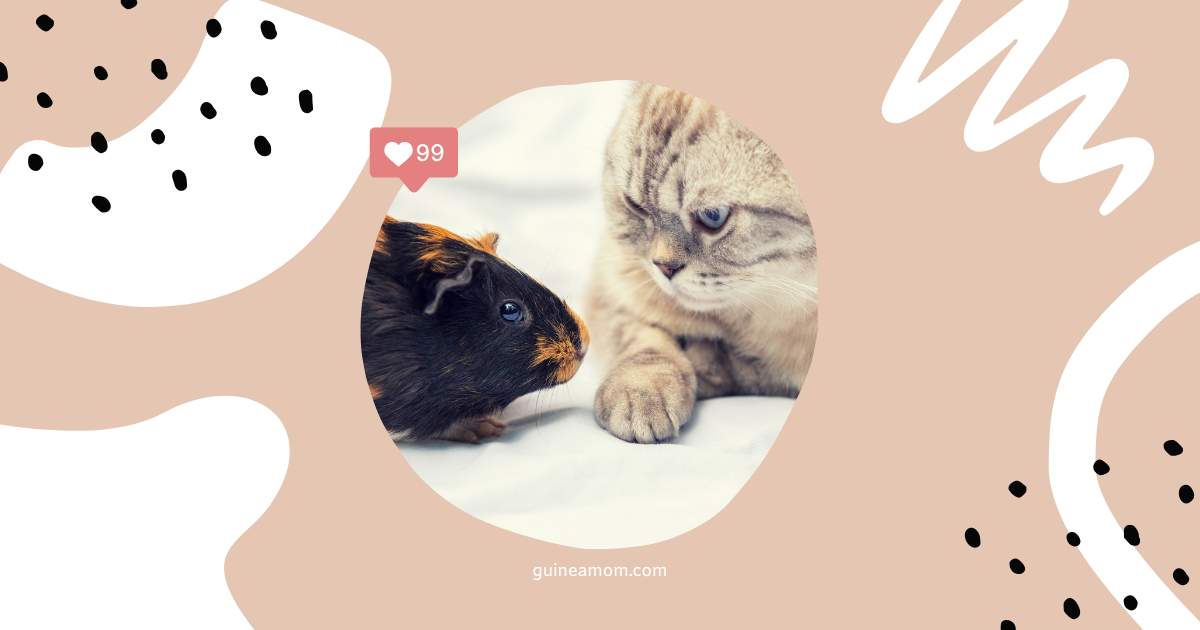
Guinea pigs and cats can sometimes coexist peacefully in the same home — many households have both — but it takes care, because cats are natural predators and guinea pigs are prey. Even a gentle, well-meaning cat has a hunting instinct that a guinea pig’s quick movements and squeaks can trigger. Some cats genuinely ignore or even befriend guinea pigs; others never can be trusted. The reassuring news is that with a secure cage, careful introductions, and constant supervision during any contact, plenty of cats and guinea pigs get along just fine as housemates. But you should never leave them alone together, and your guinea pig’s safety must always come first. Here’s how to make it work.
Predator and Prey: The Core Challenge
To keep your guinea pig safe, it helps to understand the basic dynamic. Cats are predators — domesticated partly for their hunting ability — and they retain a strong instinct to stalk, chase, and pounce on small, quick-moving creatures. Guinea pigs are prey animals, roughly the size of the small animals a cat would naturally hunt.
There’s an added twist: guinea pigs often don’t recognize the danger. Because tame guinea pigs may never have learned to fear cats, many will boldly come to the front of the cage to “say hi” to a cat — completely unaware of the risk. So you can’t rely on your guinea pig to keep itself safe; that’s your job.
That said, it’s not hopeless at all — the outcome depends heavily on the individual cat’s temperament. Some cats are calm, uninterested, or even gentle and affectionate toward guinea pigs. Others have too strong a prey drive to ever be trusted loose with them. You’ll need to read your own cat honestly.
Can They Actually Become Friends?
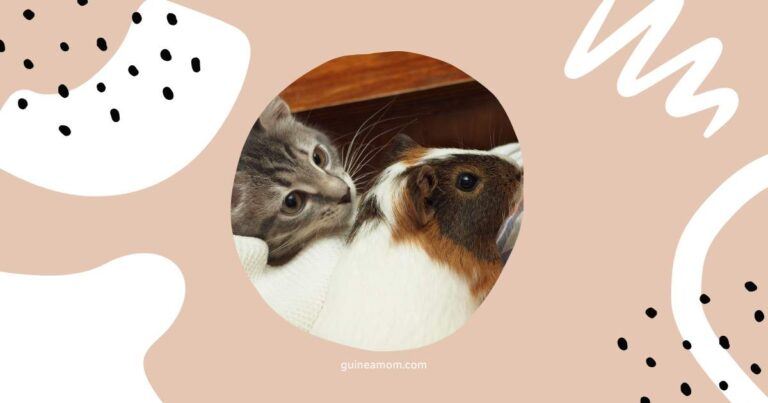
Sometimes, yes! Many owners report their cats and guinea pigs living together peacefully, ignoring each other, or even forming gentle friendships — especially when introduced carefully and early in life. A cat raised alongside guinea pigs, or one with a naturally placid nature, may treat them as unremarkable housemates rather than prey.
But this varies enormously by individual, and even a friendly-seeming relationship needs supervision. A cat that’s calm 99% of the time can still have its prey instinct triggered by a sudden squeak or dash — so “they’re friends” never means “they can be left alone together.”
How to Help Them Get Along Safely
If you have (or want) both, here’s how to manage it:
1. Provide a secure, sturdy cage. Your guinea pig’s cage is their safe haven. It must be solid and escape-proof, with bars a cat can’t reach through or knock open, and ideally a secure lid/top. A flimsy open-top pen isn’t enough with a cat around.
2. Give plenty of hidey-houses. Inside the cage, provide hideouts your guinea pig can dash into, so they feel secure and can escape the cat’s gaze.
3. Place the cage thoughtfully. Position it somewhere the cat can’t perch on top of it or stalk it constantly — a stressed guinea pig watched by a looming cat all day isn’t a happy one.
4. Introduce slowly and calmly. Let them get used to each other’s presence and scent gradually, with the guinea pig safe in their cage, before any closer contact. Keep early meetings short and calm.
5. Supervise every interaction. Any time they’re in the same space outside the cage (like floor time), watch them the entire time, and keep the cat calm. Be ready to intervene instantly.
6. Never leave them alone together. This is the golden rule — even friendly pairs. If you can’t supervise, the guinea pig should be safely in their secure cage with the cat unable to access it.
7. Keep floor time separate. The safest approach is simply to give your guinea pig their run/floor time when the cat is in another room, removing the risk entirely.
Watch Your Guinea Pig’s Stress
Even if your cat never harms your guinea pig, the mere presence of a predator can stress a prey animal. A guinea pig that’s constantly watched or stalked by a cat may become anxious, which harms their wellbeing over time. Watch for signs of chronic stress (hiding constantly, freezing, not eating), and if the cat’s presence is distressing your pig, keep them more separated — for example, house the guinea pig in a room the cat doesn’t have access to.
A Note on Cat Scratches and Bites
If a cat ever does injure a guinea pig, treat it as an emergency — cat bites and scratches can transmit bacteria (like Pasteurella) that cause serious, fast-moving infections in guinea pigs, so any wound needs prompt veterinary care, even if it looks minor.
Key Takeaways
- Guinea pigs and cats can sometimes get along and share a home peacefully — but cats are predators and guinea pigs are prey, so caution is essential.
- Even gentle cats have a hunting instinct that a guinea pig’s movement or squeaks can trigger — and guinea pigs often don’t recognize the danger.
- It depends heavily on the individual cat — some are calm or even friendly; others can’t be trusted loose with small animals.
- Make it safe with a secure escape-proof cage (with a lid), plenty of hideys, thoughtful cage placement, and slow, calm introductions.
- Supervise every interaction and never leave them alone together, even if they seem to be friends.
- The safest floor-time approach is to exercise your guinea pig when the cat is in another room.
- Watch for stress in your guinea pig, since a predator’s constant presence can be distressing.
- Treat any cat bite or scratch as an emergency — infections can be serious and fast in guinea pigs.
This article is intended as general educational information for guinea pig owners and is not a substitute for professional veterinary advice. Always prioritize your guinea pig’s safety, and consult a qualified veterinarian experienced with guinea pigs if your pig is injured or unwell.