How To Hydrate A Guinea Pig
Practical, vet-informed ways to get more water into your piggy — from bottle fixes to syringe-feeding.
To hydrate a guinea pig, start by making sure clean, fresh water is easy to reach and actually flowing — a surprising number of “not drinking” cases are just a stuck or airlocked bottle. Offer water in both a bottle and a heavy ceramic bowl to see which your pig prefers, and provide plenty of water-rich vegetables like cucumber and washed, damp leafy greens. If your guinea pig is genuinely dehydrated or refusing to drink, you can syringe-feed small amounts of water (no needle, gently, only if they’re alert and swallowing) — and contact your vet, since a pig that won’t drink is often unwell and may need veterinary fluids. A healthy guinea pig drinks roughly 80–100 ml a day (more in heat or on a dry diet). Here’s how to keep yours well hydrated.
First: Check the Water Is Actually Reaching Them
Before assuming your guinea pig “won’t drink,” rule out the most common (and easily fixed) cause: the water delivery itself.
- Test the bottle yourself. Ball-bearing bottle nozzles frequently airlock or stick, so no water comes out even though the bottle looks full. Press the ball with your finger and check it flows freely.
- Check the height and position. The spout should be at a comfortable height your pig can reach easily.
- Make sure it’s clean. A dirty or algae-filled bottle can put pigs off drinking.
- New pig? A young or newly-arrived guinea pig may simply not have found the bottle or learned to use it yet.
Fixing a faulty bottle solves a great many “hydration problems” instantly.
Offer Both a Bottle and a Bowl
Guinea pigs have preferences — some like bottles, some prefer bowls. If yours isn’t drinking well from one, offer the other too:
- A heavy ceramic bowl (tip-resistant) lets some pigs drink more naturally, and is easier to drink from than a bottle. The downside is that bedding, food, and droppings get kicked in, so it needs cleaning and refreshing at least twice a day.
- A bottle keeps water cleaner and mess-free, which is why most owners use them.
Offering both for a while lets your pig choose — and ensures they always have a working option.
Provide Water-Rich Vegetables
A big part of a guinea pig’s hydration actually comes from their food. Fresh, water-rich vegetables are a genuinely effective way to boost fluids — especially helpful for a pig that’s drinking a little less:
- Cucumber — about 95% water, and most pigs love it.
- Washed, damp leafy greens — romaine and other safe lettuces, offered with the rinse water still clinging to them.
- Other hydrating veg in appropriate amounts.
Leaving a little water on rinsed greens is a simple trick to sneak in extra moisture. (Keep portions sensible — too much watery veg at once can loosen stools.)
How to Syringe-Feed Water
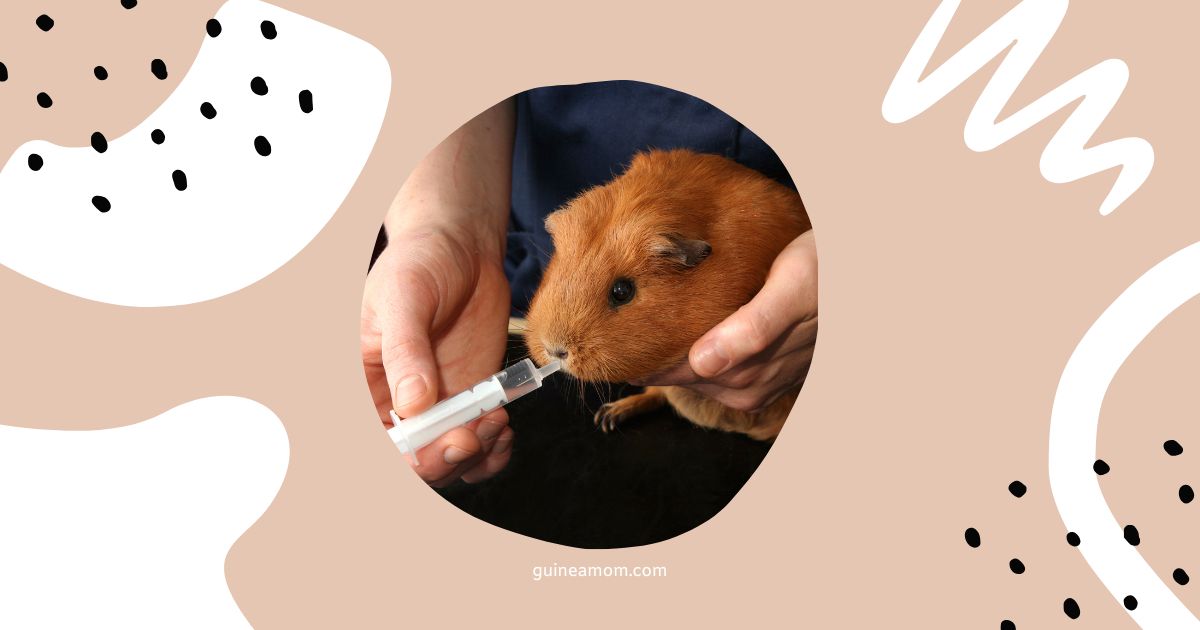
If your guinea pig is dehydrated or refusing to drink, syringe-feeding water can help — but do it carefully:
- Use a small oral syringe with no needle.
- Offer small amounts at a time, aiming for the side of the mouth, and let your pig swallow between each bit — never squirt a lot in quickly (they can inhale it).
- Only do this if your pig is alert and able to swallow. A weak or unresponsive pig needs a vet, not home syringing.
- Stay calm and gentle — stress makes it harder.
- You can also offer water or unflavored electrolyte solution this way if your vet advises it.
Syringe-feeding is a helpful stopgap, but if your pig needs it, that’s also a sign to call your vet.
When Hydration Needs a Vet
A guinea pig that won’t drink is often unwell, so hydration problems frequently need veterinary attention. Contact your vet promptly if your pig:
- Shows signs of dehydration (skin that’s slow to snap back, sunken eyes, sticky gums, lethargy, dark or scant urine)
- Hasn’t drunk for 12+ hours
- Isn’t eating (a genuine emergency in guinea pigs)
- Has diarrhea (which causes rapid fluid loss)
- Seems weak, quiet, or unwell
Severe dehydration needs veterinary fluids (given under the skin or into a vein) — something only a vet can provide — so don’t delay if home measures aren’t working.
How Much Water Should a Guinea Pig Drink?
As a rough guide, a healthy guinea pig drinks about 80–100 ml a day, though this varies a lot:
- More in hot weather, or on a dry diet (lots of hay and pellets, less fresh veg).
- Less if they eat lots of water-rich vegetables (which is fine — they’re getting moisture from food).
Rather than counting millilitres, it’s more useful to know your pig’s normal and watch for changes — plus keep an eye on their urine (pale and regular is good; dark or scant may signal dehydration).
Keeping a Guinea Pig Well Hydrated (Prevention)
- Always provide fresh, clean water, refreshed daily, day and night.
- Test the bottle regularly for airlocks and blockages.
- Consider offering both a bottle and a bowl.
- Feed water-rich vegetables daily.
- Keep them cool in summer — heat increases fluid needs and risk.
- Clean water containers often to keep water appealing.
- Monitor drinking, appetite, urine, and droppings so you spot problems early.
Key Takeaways
- First, check the water is flowing — a stuck or airlocked bottle is a common hidden cause of “not drinking.”
- Offer both a bottle and a heavy ceramic bowl so your pig can use whichever they prefer (clean bowls twice daily).
- Provide water-rich vegetables — cucumber and washed, damp leafy greens boost hydration through food.
- Syringe-feed small amounts of water (no needle, gently, side of the mouth) if your pig is dehydrated but alert and swallowing.
- A pig that won’t drink is often unwell — contact a vet, especially with dehydration signs, no eating, diarrhea, or after 12+ hours.
- Severe dehydration needs veterinary fluids — don’t delay if home measures aren’t working.
- Healthy pigs drink ~80–100 ml a day (more in heat, less on a veg-rich diet) — know your pig’s normal and watch their urine.
This article is intended as general educational information for guinea pig owners and is not a substitute for professional veterinary advice. If your guinea pig is dehydrated, won’t drink, or isn’t eating, consult a qualified veterinarian experienced with guinea pigs promptly.