Common Guinea Pig Illnesses And Their Symptoms
A practical guide for spotting trouble early and keeping your piggy healthy
Guinea pigs are prey animals, which means they’re hardwired to hide illness for as long as possible. By the time a piggy looks sick, they’re often already quite unwell. The most common health problems you’ll run into are vitamin C deficiency (scurvy), respiratory infections, dental disease, urinary problems (like bladder stones), digestive issues (bloat and GI stasis), skin conditions (mites, lice, and fungal infections), and bumblefoot. The warning signs to watch for are surprisingly consistent across all of them: a guinea pig that stops eating, hides more than usual, sits hunched and fluffed up, or loses weight needs a vet — ideally one who specializes in exotic or “small furry” animals. When in doubt, call your vet. With guinea pigs, a day of “wait and see” can be the difference between a quick recovery and a serious emergency.
Why Guinea Pigs Are Tricky Patients
Before we dig into specific illnesses, it helps to understand why guinea pig health needs such close attention.
In the wild, a guinea pig that shows weakness becomes a target. That instinct doesn’t switch off in your living room. Your piggy will keep eating, popcorning, and acting “normal” right up until they physically can’t anymore. This is why the golden rule of guinea pig ownership is to know your animal’s baseline — how much they normally eat, how active they are, what their droppings look like, and how much they weigh. A small kitchen scale and a quick weekly weigh-in is one of the most powerful health tools you have. A drop of 50–100 grams over a week or two is often the first and only early sign that something is wrong.
Guinea pigs also go downhill fast. A rabbit or a cat might give you a few days of grace; a guinea pig can decline within hours, especially with respiratory or digestive problems. So throughout this article, when you see “see a vet promptly,” please take it literally.
1. Vitamin C Deficiency (Scurvy)
This is the big one, and it’s almost entirely preventable. Unlike most animals, guinea pigs cannot produce their own vitamin C — they have to get it from their diet every single day. Without enough, they develop scurvy, which affects everything from their joints to their immune system to how well they heal.
Symptoms to watch for:
- A rough, puffed-up, or unkempt coat
- Reluctance to move, or appearing stiff and sore (especially in the legs and joints)
- Swollen or painful joints
- Loss of appetite
- Lethargy and general “not themselves” behavior
- Bleeding gums or small skin hemorrhages
- Slow-healing wounds and frequent secondary infections
- Diarrhea in some cases
The good news: prevention is simple. Offer fresh vegetables rich in vitamin C daily (bell peppers are a favourite and a powerhouse), feed a quality guinea-pig-specific pellet that’s fortified with stabilized vitamin C, and provide unlimited fresh hay. Avoid relying on vitamin C drops in water — they degrade quickly in light and can make the water taste odd, causing your piggy to drink less. If your vet diagnoses a deficiency, they’ll usually recommend a proper supplement and a diet review.
2. Respiratory Infections (Including Pneumonia)
Respiratory infections are one of the most common and most dangerous illnesses in guinea pigs. Bacteria such as Bordetella and Streptococcus are frequent culprits, and what starts as a mild “cold” can progress to pneumonia alarmingly fast.
Symptoms to watch for:
- Sneezing, often repeatedly
- Discharge from the nose or eyes (clear, crusty, or coloured)
- Labored, fast, or open-mouthed breathing
- Wheezing, clicking, or crackling sounds when breathing
- Loss of appetite
- Lethargy and hiding
- Fluffed-up posture
What to do: treat this as urgent. Difficulty breathing is an emergency. Respiratory infections need prescription antibiotics from a vet — there’s no safe home remedy, and the right antibiotic matters enormously (some common antibiotics are actually toxic to guinea pigs). Keep your piggy warm, quiet, and eating while you arrange a vet visit. Good ventilation, dust-free bedding, and avoiding drafts all help prevent these infections in the first place.
3. Dental Disease and Malocclusion
A guinea pig’s teeth never stop growing — both the front incisors and the back molars. Normally, all that hay-chewing keeps them ground down to the right length. But if the teeth grow unevenly (malocclusion), they can develop sharp points, spurs, or overgrowth that make eating painful or impossible.
Symptoms to watch for:
- Drooling or a constantly wet chin and chest (owners often call this “slobbers”)
- Dropping food while eating, or “quidding” (chewing then spitting out)
- Picking up food but struggling to eat it
- Preferring soft foods and refusing hay
- Weight loss
- Pawing at the mouth
- Bad breath or visible discomfort
Why hay matters: the single best prevention is unlimited grass hay (like Timothy hay), which forces the natural side-to-side chewing motion that wears the molars down properly. Malocclusion often needs a vet to file the teeth back into shape, sometimes repeatedly, and back-molar problems can only be diagnosed with a proper oral exam — so any guinea pig that’s losing weight or “fussy” about food deserves a dental check.
4. Urinary Problems (Bladder Stones, Sludge, and UTIs)
Guinea pigs are prone to urinary tract issues, partly because of how their bodies process calcium. Bladder stones (calculi) and gritty “bladder sludge” are common, as are urinary tract infections.
Symptoms to watch for:
- Blood in the urine (it may look pink, red, or rusty)
- Straining to urinate, often with a hunched posture
- Squeaking or crying out while urinating
- Frequent trips to urinate, sometimes producing only small amounts
- A wet or stained bottom
- Loss of appetite and lethargy if they’re in pain
What to do: any sign of bloody urine or painful urination warrants a vet visit. Stones often need to be removed, and infections need antibiotics. Diet plays a role in prevention — encourage plenty of water intake, go easy on very high-calcium vegetables (like alfalfa hay for adults, or excessive spinach and kale), and make sure your piggy always has fresh water available.
5. Digestive Problems: Bloat and GI Stasis
A guinea pig’s digestive system needs to keep moving constantly. When it slows down (gastrointestinal stasis) or fills with gas (bloat), it becomes a genuine emergency.
Symptoms to watch for:
- Not eating, or eating much less than normal
- Producing fewer, smaller, or no droppings
- A swollen, hard, or visibly distended belly
- Hunching, teeth grinding (a sign of pain), and reluctance to move
- Lethargy
- A tight “drum-like” abdomen if you gently tap it (in the case of bloat)
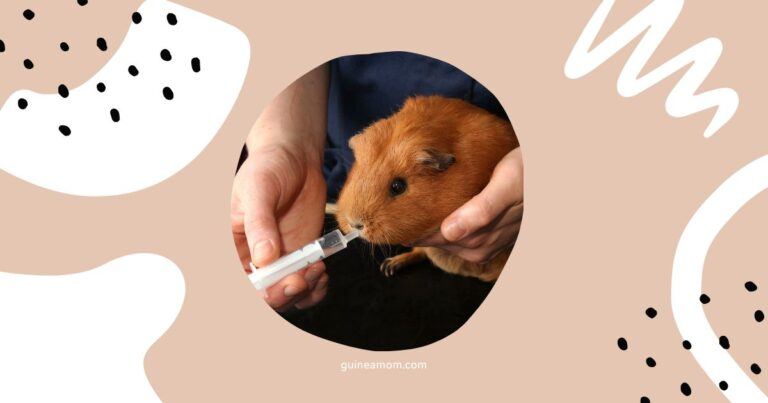
Why it’s serious: a guinea pig that stops eating and pooping can deteriorate within hours. If your piggy isn’t eating, that alone is reason enough to call a vet the same day. Treatment often includes pain relief, motility medication, gut-stimulating care, and syringe-feeding a recovery formula to keep the gut moving. Prevention comes down to a high-fiber, hay-based diet and being cautious with gas-producing veggies (such as cabbage, broccoli, and cauliflower) in large amounts.
6. Diarrhea
True diarrhea — genuinely watery, formless stool, not just slightly soft droppings — is always a red flag in guinea pigs. It can stem from a sudden diet change, too many watery vegetables, an infection, parasites, or a reaction to the wrong antibiotic.
Symptoms to watch for:
- Loose, watery, or unformed droppings
- A messy, soiled bottom
- Lethargy and loss of appetite
- Signs of dehydration (sunken eyes, reduced skin elasticity)
- Rapid weight loss
What to do: because guinea pigs are small, dehydration sets in quickly, so don’t wait this one out. Remove fresh veggies temporarily, make sure unlimited hay and water are available, and get to a vet — especially if your piggy is also off their food or sluggish. Never give human anti-diarrhea medication.
7. Skin Problems: Mites, Lice, and Fungal Infections
Itchy, flaky, or patchy skin is one of the most common reasons guinea pigs end up at the vet. The three usual suspects are mites, lice, and fungal infections (ringworm).
Mange mites (Trixacarus caviae) are the most serious. They burrow into the skin and cause intense, miserable itching.
- Frantic scratching and biting at the skin
- Hair loss, scabs, and crusty, thickened skin
- Restlessness and obvious distress
- In severe cases, the pain can trigger seizure-like episodes when the piggy is handled
Lice are less severe but still uncomfortable, causing itching, scratching, and visible specks moving in the fur, usually around the ears and neck.
Fungal infections (ringworm) typically show as:
- Circular patches of hair loss
- Flaky, crusty, or red skin, often starting around the face, nose, and ears
- Itchiness (though not always)
Important note: ringworm is zoonotic, meaning it can spread to humans and other pets, so wash your hands after handling an affected piggy. All three conditions are very treatable with the right vet-prescribed product, but it’s worth getting a proper diagnosis rather than guessing, since the treatments differ. Stress and overcrowding can make outbreaks worse, so good hygiene and not over-handling a sick piggy both help.
8. Bumblefoot (Pododermatitis)
Bumblefoot is a painful inflammation and infection of the footpads. It’s usually caused by environmental factors: wire or rough cage floors, dirty or damp bedding, lack of exercise, or obesity putting extra pressure on the feet.
Symptoms to watch for:
- Swollen, red, or puffy footpads
- Scabs, sores, or open ulcers on the bottom of the feet
- Limping or reluctance to walk
- Sensitivity when the feet are touched
- In advanced cases, the infection can spread deeper into the foot
Prevention is everything here: keep your piggy on soft, clean, dry bedding (fleece liners or deep paper-based bedding work well), avoid wire floors entirely, spot-clean frequently, and help your piggy maintain a healthy weight. Early bumblefoot can sometimes be managed at home with your vet’s guidance, but advanced cases need proper veterinary treatment.
9. Ovarian Cysts (in Unspayed Females)
Ovarian cysts are extremely common in older, unspayed female guinea pigs. They often develop quietly over time.
Symptoms to watch for:
- Symmetrical hair loss on both flanks/sides
- A swollen or enlarged abdomen
- Crusty or enlarged nipples
- Changes in behaviour, including increased aggression or restlessness
- Reduced appetite if the cysts grow large
What to do: a vet can confirm cysts with an ultrasound. Treatment options range from hormone therapy to draining the cysts to spaying, depending on the situation. If you have a female piggy losing fur on both sides evenly, cysts are a likely cause and worth investigating.
10. Heatstroke
Guinea pigs handle cold far better than heat. They can become dangerously overheated at temperatures that feel merely warm to us — generally anything above roughly 26°C (80°F), especially with humidity or direct sun.
Symptoms to watch for:
- Panting or rapid, open-mouthed breathing
- Drooling
- Weakness, stumbling, or lying flat and unresponsive
- Lethargy
- Convulsions in severe cases
What to do: heatstroke is a life-threatening emergency. Move your piggy to a cool, shaded spot immediately, offer water, and cool them gradually — never plunge them into cold water. Dampening the feet and ears with cool (not ice-cold) water can help. Then get to a vet. To prevent it, keep cages out of direct sunlight, provide good airflow, and use frozen water bottles wrapped in a towel or ceramic tiles for piggies to lean against on hot days.
When to See a Vet (Don’t Wait On These)
Some signs mean “call the vet today,” and a few mean “this is an emergency.” Because guinea pigs hide illness and decline quickly, it’s always safer to err on the side of caution.
Call your vet promptly if you notice:
- Not eating or a noticeably reduced appetite
- No droppings, or a sudden change in droppings
- Weight loss
- Hiding, lethargy, or sitting hunched and fluffed up
- Teeth grinding (a sign of pain)
Treat as an emergency:
- Difficulty breathing, gasping, or open-mouthed breathing
- A bloated, hard abdomen
- Collapse, seizures, or unresponsiveness
- Signs of severe pain
- Heatstroke symptoms
One more tip: not all vets treat guinea pigs confidently. It’s well worth finding an exotic or small-animal specialist vet before you have an emergency, so you’re not scrambling when minutes matter.
A Quick Word on Prevention
The vast majority of the illnesses above are either preventable or far less dangerous when caught early. The fundamentals are refreshingly simple:
- Unlimited fresh grass hay, every day, for digestion and dental health.
- Daily vitamin C through fresh veggies and quality pellets.
- Fresh, clean water at all times.
- Clean, dry, soft bedding and a cage cleaned regularly.
- A safe temperature range — cool rather than hot.
- Weekly weigh-ins to catch problems before they show.
- A health “once-over” as you handle your piggy: check eyes, nose, teeth, feet, bottom, and coat.
Pair those habits with knowing your individual guinea pig’s normal behaviour, and you’ll spot most problems early — which is exactly when they’re easiest to treat.
Key Takeaways
- Guinea pigs hide illness. As prey animals, they mask symptoms until they’re quite unwell, so subtle changes matter, and a “wait and see” approach is risky.
- The universal warning signs are not eating, fewer or no droppings, weight loss, hiding, lethargy, and a hunched, fluffed-up posture. Any of these warrants attention.
- Vitamin C is non-negotiable. Guinea pigs can’t make their own, so daily dietary vitamin C prevents scurvy.
- Respiratory and digestive problems move fast. Breathing difficulty or a piggy that stops eating and pooping are emergencies, not next-week problems.
- Hay is medicine. Unlimited grass hay supports healthy teeth and a healthy gut, preventing two whole categories of common illness.
- Skin issues are common and treatable — but mites, lice, and fungal infections need different treatments, so get a proper diagnosis rather than guessing.
- Weigh your piggy weekly. A small scale is one of the best early-warning tools you have.
- Find an exotic-savvy vet in advance. Not all vets are confident with guinea pigs, and you don’t want to be searching during an emergency.
This article is intended as general educational information for guinea pig owners and is not a substitute for professional veterinary advice. If you’re worried about your guinea pig’s health, please contact a qualified veterinarian.