Meadow Hay For Guinea Pigs
A varied, foraging-friendly hay guinea pigs love — with one thing to watch (calcium).
Meadow hay is a good, safe hay for guinea pigs that many pigs genuinely love. Unlike single-grass hays, meadow hay is a natural mix of different grasses, leaves, flowers, and seed heads harvested from pastures — which makes it varied, interesting, and brilliant for encouraging foraging behavior. It also tends to have a wider range of minerals and trace elements than single-grass hays, and is often cheaper too. The one thing to watch: meadow hay can be higher in calcium than timothy or orchard grass (and its mix may occasionally include plants your pig doesn’t fancy), so for pigs prone to bladder stones, some sources suggest offering it more as a supplement or treat alongside a lower-calcium staple like timothy. For most healthy pigs, though, it’s a lovely everyday or rotation hay. Here’s the full guide.
What Is Meadow Hay?
Meadow hay is exactly what it sounds like — hay made from the grasses and plants of a natural meadow or pasture. Rather than being a single type of grass (like timothy or orchard), it’s a mixture of whatever grows in that field: various grasses, leaves, flowers, and seed heads. This gives it a few distinctive qualities:
- Varied texture and flavor — no two batches are quite the same, which pigs find interesting.
- A wider range of minerals and trace elements than single-grass hays, thanks to the plant variety.
- Usually just one cutting per season (you don’t get the 1st/2nd/3rd cut choices you do with timothy).
- Often golden in color (whereas most other good hays should be green) — though it should still be fresh, dry, and not dusty or musty.
- Typically cheaper than timothy hay.
Why Guinea Pigs Love Meadow Hay
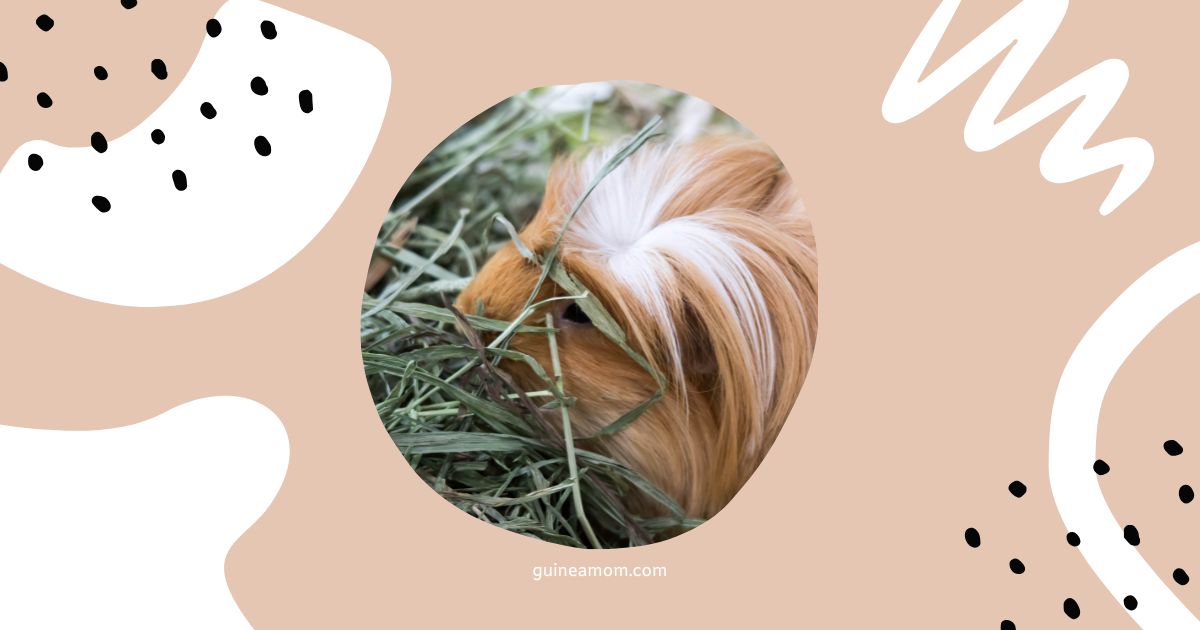
The big appeal of meadow hay is enrichment. Because it’s a natural mix of grasses, leaves, flowers, and seed heads, it gives guinea pigs lots of different things to pick through and nibble — which taps right into their instinct to forage. Many pigs find rummaging through meadow hay for the tasty bits genuinely engaging, so it’s a great way to keep them mentally stimulated and encourage hay-eating. The variety of textures and flavors is something single-grass hays can’t match.
The One Thing to Watch: Calcium
Here’s the main consideration with meadow hay: it can be higher in calcium than timothy or orchard grass. Since guinea pigs are prone to bladder stones and sludge (often linked to excess calcium), this matters for some pigs.
For this reason:
- For most healthy guinea pigs, meadow hay is fine as an everyday or rotation hay.
- For pigs prone to bladder stones or urinary problems, it’s wiser to use a lower-calcium staple (like timothy) as the main hay, and offer meadow hay more as a supplement, for variety, or as a treat — or check with your vet.
A second minor point: because meadow hay is a natural mix, it may occasionally contain plants your particular pig doesn’t like (or, rarely, the odd bit they’ll leave) — but this isn’t usually a safety issue with good-quality meadow hay, just a quirk of the variety.
Can Meadow Hay Be the Main Hay?
For most healthy adult guinea pigs, yes — meadow hay can be fed unlimited as a staple, meeting their needs for fiber, dental wear, and foraging. Plenty of owners (especially in the UK, where meadow hay is popular and readily available) use it as their pigs’ main hay very successfully.
That said, a common and sensible approach is to combine meadow hay with timothy or orchard grass — using a lower-calcium grass hay as the reliable base, and meadow hay for variety, foraging enrichment, and tempting fussy eaters. This gives you the best of both: a balanced staple plus the interest of the meadow mix.
How to Feed and Choose Meadow Hay
- Offer it unlimited (or as a supplement to timothy for stone-prone pigs), always available.
- Choose fresh, sweet-smelling hay — meadow hay is often golden rather than green, but it should still be dry, fragrant, and free of dust and mold.
- Check it over for any obvious weeds or debris, since it’s a natural mix.
- Store it somewhere cool, dry, and airy.
- Introduce it gradually if it’s new, and watch how your pig takes to it.
- Always pair hay with fresh vegetables, a little pellet, and daily vitamin C (hay doesn’t provide vitamin C).
Key Takeaways
- Meadow hay is a good, safe hay for guinea pigs — a natural mix of grasses, leaves, flowers, and seed heads, rather than a single grass.
- It’s excellent for foraging and enrichment, offers a wider range of minerals, and is often cheaper than timothy.
- The main thing to watch is calcium — meadow hay can be higher in calcium, so for stone-prone pigs, use a lower-calcium staple (like timothy) and offer meadow hay more as a supplement or treat.
- For most healthy pigs, it can be the main hay, fed unlimited — or combined with timothy/orchard for a balanced, varied approach.
- It’s often golden rather than green — but should still be fresh, dry, fragrant, and dust-free.
- Introduce gradually, store well, and always pair hay with veg and a vitamin C source.
This article is intended as general educational information for guinea pig owners and is not a substitute for professional veterinary advice. If your guinea pig has a history of bladder stones or other health concerns, consult a qualified veterinarian experienced with guinea pigs about the best hay for them.