Can Guinea Pigs Eat Watermelon?
Yes — a refreshing summer treat, in small amounts. Here’s the safe portion, the seed warning, and the honest truth about the rind.
Yes, guinea pigs can eat watermelon — as a small, occasional treat. It’s hydrating and refreshing (lovely on a hot day), and contains some vitamin A, a little vitamin C, and fiber. But watermelon is mostly water and sugar, and too much can cause diarrhea and digestive upset, so keep servings small: roughly a 1-inch cube of flesh per guinea pig, about once a week. Two important safety points: always remove the seeds (especially the hard black ones — a genuine choking hazard), and be aware that sources genuinely disagree about whether to feed the rind (more on that below). Watermelon is not a good vitamin C source, so don’t rely on it for that — bell peppers do that job far better. Here’s the full guide.
Is Watermelon Safe for Guinea Pigs?
Yes — watermelon isn’t toxic to guinea pigs and is widely considered a safe occasional treat by vets and guinea pig specialists. Most pigs love it, and its high water content makes it a genuinely refreshing snack in summer.
But as with all fruit, it’s a treat, not a food group. Fruit should make up no more than about 5% of a guinea pig’s diet, with the bulk being unlimited hay (~80%), fresh vegetables, and a small portion of pellets.
How Much Watermelon Can a Guinea Pig Eat?
Recommendations vary slightly between sources, but a safe, sensible approach is:
- Portion: roughly a 1-inch (2.5cm) cube of watermelon flesh per guinea pig — think a small, bite-size piece. (Some vets suggest as little as a teaspoon-sized cube.)
- Frequency: about once a week, and no more than twice.
- Rotate: if your pig has had other fruit that week, skip or reduce the watermelon. Don’t stack fruit treats.
Feed less or skip it if your guinea pig is overweight, has digestive problems, or has a history of soft stools. And baby guinea pigs shouldn’t have watermelon until they’re at least a few weeks old — and then only a tiny amount (about the size of a small fingernail).
Why Watermelon Must Be Limited
Two reasons:
Sugar. Like all fruit, watermelon is high in natural sugar, which guinea pigs digest poorly. Too much disrupts the balance of gut bacteria their digestion depends on, causing soft stools, diarrhea, and discomfort, and over time contributing to obesity.
Water content. Watermelon is famously mostly water — which is refreshing, but a large amount can go straight through a guinea pig and cause diarrhea. In a small animal, diarrhea is genuinely serious, not just messy.
The Seeds: Always Remove Them
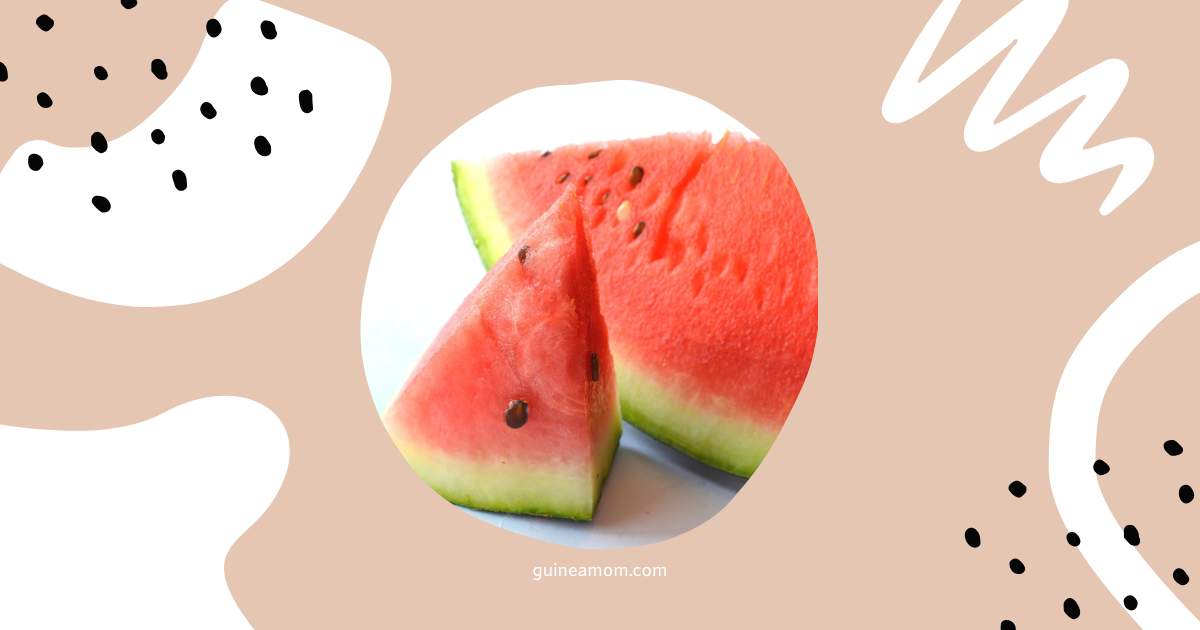
This is the most important safety point. Watermelon seeds are not toxic, but they are a real choking hazard — particularly the hard black mature seeds, which are simply too large for a guinea pig to handle safely.
- Always remove all black seeds before serving.
- Seedless watermelon is the safest choice.
- Even the soft white immature seeds found in “seedless” melons are worth removing where you can, as there’s still some risk.
- Seeds offer no nutritional benefit that justifies the hazard.
What About the Rind? (An Honest Answer)
Here’s where I’ll be straight with you, because the sources genuinely disagree on this one:
Some vets and guinea pig specialists say the rind is fine — even preferable in some ways, since it’s lower in sugar than the flesh and contains fiber and vitamin C. Their advice: rinse it very thoroughly and cut it into small, bite-sized pieces.
Other vets advise against it, arguing the rind is tough and difficult to chew, swallow, and digest, which brings a risk of choking or, in larger amounts, intestinal blockage. They also point out the rind carries more concentrated pesticide residue and surface bacteria than the flesh.
The sensible middle ground: if you want to offer rind, use organic or very thoroughly washed watermelon, offer only a small piece of the softer inner white part (not the tough green skin), cut it small, and watch your pig closely the first time. If you’re at all unsure, or your pig has any history of digestive problems, stick to the flesh — you lose nothing important by skipping the rind.
Whatever you decide, always wash the outside of the melon before cutting it, even if you’re not feeding the rind — otherwise the knife drags surface pesticides and bacteria through the flesh.
Is Watermelon Good for Guinea Pigs?
It has modest benefits:
- Hydration — its high water content is genuinely refreshing, especially in hot weather.
- Vitamin A — good for eyes and immune function.
- Some vitamin C — but honestly not much compared to other options. Watermelon is a poor vitamin C source; bell peppers, strawberries, and kiwi are far better.
- A little fiber.
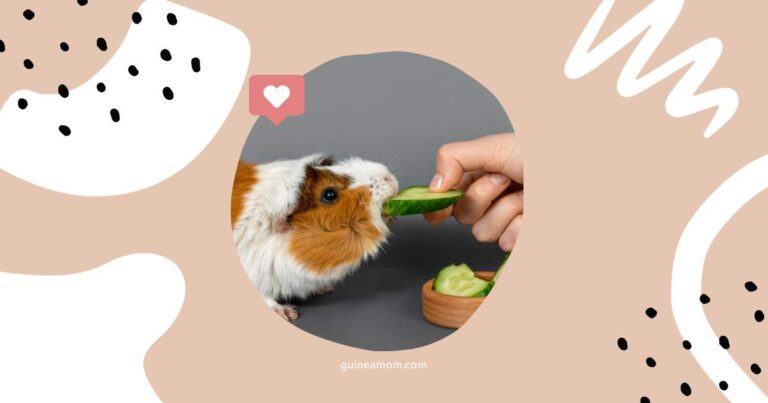
- Enjoyment and enrichment — most pigs love it, and hand-feeding a treat is a lovely bonding moment.
So enjoy it as a treat, but don’t feed it for the nutrition.
How to Serve Watermelon Safely
- Wash the whole melon thoroughly before cutting.
- Remove all seeds, especially the black ones.
- Cut the flesh into a small cube (about an inch), removing the tough green skin.
- Serve fresh and raw, at room temperature — never straight from the fridge or frozen, which can cause digestive upset.
- Introduce gradually — offer a tiny piece first and check droppings and appetite the next day.
- Remove uneaten watermelon within a couple of hours, since it spoils quickly and attracts flies.
What NOT to Feed
- Watermelon juice — concentrated sugar, no fiber.
- Frozen or fridge-cold watermelon — let it come to room temperature first.
- Rotten or overripe watermelon.
- Canned, sweetened, or processed watermelon products.
- The seeds, and the tough outer green skin.
When to Call a Vet
Contact your vet if, after eating watermelon, your guinea pig has diarrhea lasting more than a few hours, stops eating (a genuine emergency in guinea pigs), produces few or no droppings, or seems bloated, hunched, or in pain. Any signs of choking — pawing at the mouth, distress, or noisy breathing — need urgent attention.
Key Takeaways
- Yes, guinea pigs can eat watermelon as a small, occasional treat — hydrating and refreshing, especially in summer.
- Serve about a 1-inch cube of flesh per pig, about once a week, and keep all fruit under ~5% of the diet.
- Limit it because it’s high in sugar and water — too much causes diarrhea and digestive upset.
- Always remove the seeds — the hard black ones especially are a genuine choking hazard; seedless is safest.
- Sources genuinely disagree about the rind — if you offer it, use well-washed or organic melon, a small piece of the soft inner white part only, and watch closely; when in doubt, stick to the flesh.
- Watermelon is a poor vitamin C source — use bell peppers, strawberries, or kiwi for that.
- Serve fresh, raw, and at room temperature — never juice, frozen, or fridge-cold — and remove leftovers quickly.
- Babies, overweight pigs, and those with digestive problems should have very little or none.
This article is intended as general educational information for guinea pig owners and is not a substitute for professional veterinary advice. Introduce all new foods gradually, and consult a qualified veterinarian experienced with guinea pigs if your pig shows digestive upset or any signs of illness.