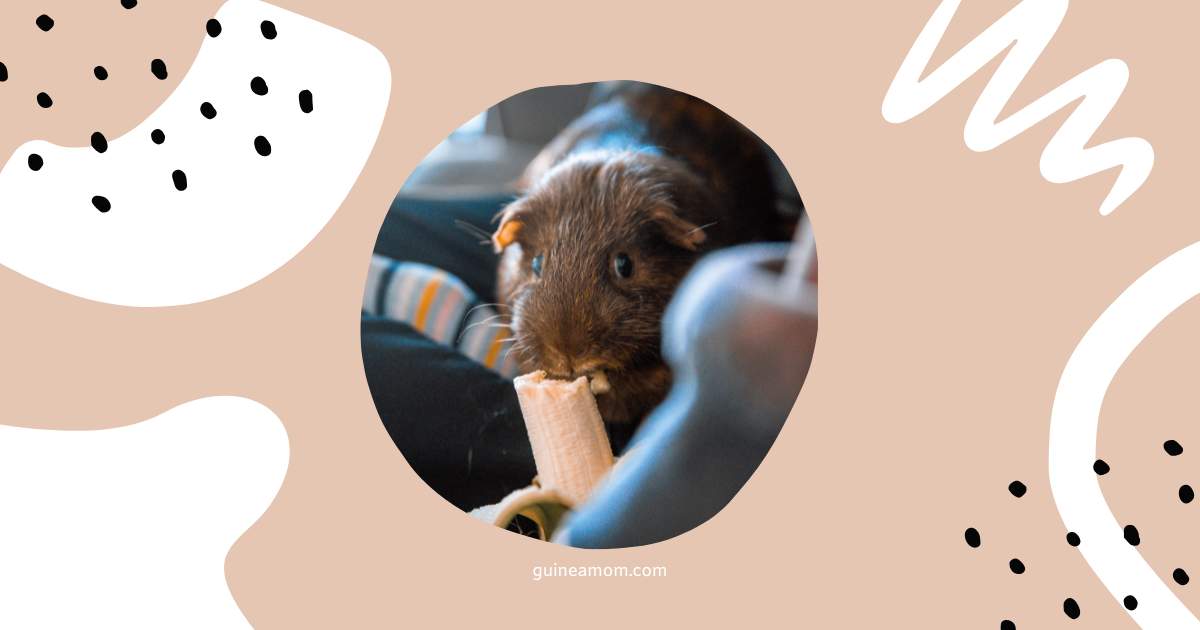
Can Guinea Pigs Eat Banana?
Yes — but only a thin slice, and rarely. Banana is one of the sugariest treats you can offer.
Yes, guinea pigs can eat banana — but it’s one of the fruits that needs the strictest limiting. A fully ripe banana can be up to 16% sugar, making it far sweeter than most guinea pig treats, and it’s also high in starch. Too much risks obesity, digestive upset, and dental problems. A safe serving is about one thin “coin” slice per guinea pig, roughly once a week (about 10–15 grams). Choose a ripe yellow banana — green ones are too starchy and cause bloating, while heavily brown-spotted ones are the sugariest. Bananas do offer vitamin C, potassium, and fiber, but they shouldn’t be relied on for nutrition. And there’s one sneaky risk worth knowing: pigs fed sweet treats often start refusing their healthy food. Here’s the full guide.
Why Banana Needs Such Strict Limiting
Most fruit gets limited for sugar, but banana is a particularly extreme case for two reasons:
It’s very high in sugar. A fully ripe banana can contain as much as 16% sugar — considerably more than strawberries (~5%) or most other fruit treats. Guinea pigs are prone to obesity and metabolic problems, and their digestive systems rely on a delicate balance of gut bacteria that too much sugar disrupts.
It’s also high in starch. Banana contains significant starch, which converts to sugar as it ripens. Unripe green bananas are especially problematic — they’re full of resistant starch that’s hard for guinea pigs to digest and can cause bloating and gas.
Add the fact that too much sugar contributes to dental problems (guinea pigs’ teeth grow continuously and need hay, not sweets), and banana clearly belongs in the “rare treat” category.
How Much Banana Can a Guinea Pig Eat?
Keep it genuinely small:
- Portion: about one thin “coin” slice per guinea pig — roughly 10–15 grams.
- Frequency: about once a week. (You could split it — half a coin twice a week — but don’t exceed roughly one coin’s worth weekly.)
- First time? Offer an even smaller piece and check their droppings and appetite the next day.
- Don’t stack sugary treats. Avoid feeding banana and other high-sugar fruit (like apple) on the same day — it doubles the sugar load.
Skip banana entirely if your guinea pig is overweight, has digestive problems, or has any diabetes-like or kidney issues. Lower-sugar options like strawberries or leafy greens are far better for them.
Choose the Right Ripeness
This matters more with bananas than most fruit:
- ✅ Ripe yellow banana — the right choice.
- ❌ Green/unripe — too much resistant starch; hard to digest and can cause bloating.
- ❌ Heavily brown-spotted/overripe — the sugar content is at its highest.
What About the Banana Peel?
Here’s where sources genuinely disagree, so I’ll give you both sides:
Some sources say yes — the peel is non-toxic and nutritious, containing fiber and nutrients, and can be offered in moderation.
Others advise against it — noting that banana crops are heavily sprayed with pesticides (residue concentrates in the peel), that most guinea pigs don’t actually like it, and that its tough texture is harder to digest.
The sensible middle ground: if you want to offer peel, use an organic banana, wash it thoroughly, remove any stickers, and cut a small strip. But honestly — most pigs aren’t interested, and there’s no nutritional reason you need to. The flesh is what they want, and skipping the peel costs you nothing.
(Banana leaves, by the way, are best skipped — too tough and fibrous, with no benefit.)
The Sneaky Risk: Fussy Eating
Here’s a risk that doesn’t get mentioned often enough. Guinea pigs that regularly get sweet treats can start holding out for them — refusing hay and vegetables in the hope that something sweeter is coming. Owners who’ve fed banana frequently have reported their pigs stopping eating bell peppers entirely.
This matters because hay is 80% of a guinea pig’s diet and essential for both digestion and dental health. A pig that’s learned to hold out for banana is a pig eating less of what actually keeps them alive. So keep sweet treats genuinely occasional — for your pig’s sake, not just their waistline.
Does Banana Have Any Benefits?
Some, though nothing you can’t get better elsewhere:
- Vitamin C — useful, but bananas shouldn’t be a primary source (bell peppers are far better).
- Potassium — an electrolyte supporting organ function.
- Some fiber — though hay provides virtually all the fiber they need.
- Vitamin B6 and antioxidants.
- Enjoyment — most guinea pigs adore banana, and a small treat is a lovely bonding moment.
How to Serve Banana Safely
- Choose a ripe yellow banana (not green, not heavily spotted).
- Peel it (unless you’re deliberately offering a small piece of washed organic peel).
- Cut one thin coin slice, then offer a portion of that.
- Serve raw and fresh, at room temperature.
- Introduce gradually — a tiny piece first, checking droppings the next day.
- Remove uneaten banana within a couple of hours — it browns and spoils fast.
What NOT to Feed
- Banana chips and dried banana — sugar is hugely concentrated, and most contain added sugar or oils.
- Frozen banana (or anything fridge-cold).
- Cooked or processed banana.
- Banana bread, smoothies, or anything sweetened.
- Green/unripe banana.
When to Call a Vet
Contact your vet if, after eating banana, your guinea pig has diarrhea lasting more than a few hours, constipation or few droppings, stops eating (a genuine emergency in guinea pigs), or seems bloated, hunched, or in pain.
Allergic reactions are rare but possible — swelling, itchiness, or significant GI upset warrants a call to your vet.
Key Takeaways
- Yes, but banana is one of the most sugar-heavy treats — a ripe banana can be up to 16% sugar, plus significant starch.
- Serve about one thin “coin” slice (10–15g) per pig, roughly once a week — and don’t pair it with other sugary fruit the same day.
- Choose ripe yellow bananas — green ones are too starchy (bloating), overripe ones the sugariest.
- The peel is debated — non-toxic and nutritious, but pesticide-heavy and usually unwanted; if offering it, use organic, wash well, and keep it tiny.
- Watch for fussy eating — pigs used to sweet treats may start refusing hay and vegetables, which is genuinely harmful.
- Skip banana for overweight pigs or those with digestive or metabolic problems.
- Never feed banana chips, dried, frozen, cooked, or sweetened banana products.
- For vitamin C, bell peppers are far better — treat banana as a rare bit of fun, not nutrition.
This article is intended as general educational information for guinea pig owners and is not a substitute for professional veterinary advice. Introduce all new foods gradually, and consult a qualified veterinarian experienced with guinea pigs if your pig shows digestive upset or any signs of illness.