Can Guinea Pigs Eat Corn On The Cob?
Yes — but which part matters enormously. The husks and silk are the best bits, not the kernels.
Yes, guinea pigs can eat corn on the cob — but here’s the crucial thing most people don’t realize: different parts of the corn are very different nutritionally. The husks (the green leaves) and the silk (the stringy hairs) are actually the best parts — high in fiber, low in sugar, and safe to offer a few times a week. The kernels, by contrast, are starchy and sugary, so they should be a small, occasional treat only. And the hard woody cob itself should be removed once your pig has finished — it isn’t food and poses a genuine blockage risk. Everything must be fresh and raw — never cooked, canned, buttered, salted, or popped. Bonus: corn husks make brilliant, free enrichment. Here’s the full breakdown.
The Different Parts of Corn — Ranked
This is the key to feeding corn safely. Here’s how the parts stack up, best to worst:
🥇 Corn husks (the green leaves) — the best part
The leafy husks are high in fiber and low in sugar, which fits a guinea pig’s dietary needs beautifully. They’re tough and fibrous — hard for us to chew, but guinea pigs munch through them happily, and the fiber is genuinely good for them. Many pigs actually prefer the husks to the corn itself.
Use the inner husks. The outer leaves are more likely to have been exposed to pesticides, dirt, and insects, so peel those away and offer the cleaner inner layers.
Frequency: several times a week is fine.
🥈 Corn silk (the stringy hairs) — excellent too
The fine silky strands between the husk and the kernels are nutritious, low in sugar, and much loved by guinea pigs. Some sources consider silk one of the healthiest parts of the whole corn plant.
Frequency: several times a week is fine.
🥉 Corn kernels — a small, occasional treat
The sweet yellow kernels are the part most people think of, but they’re the least suitable of the edible parts. Kernels are relatively high in starch and natural sugars compared to the leafy vegetables guinea pigs thrive on, and a low-carbohydrate diet suits them best.
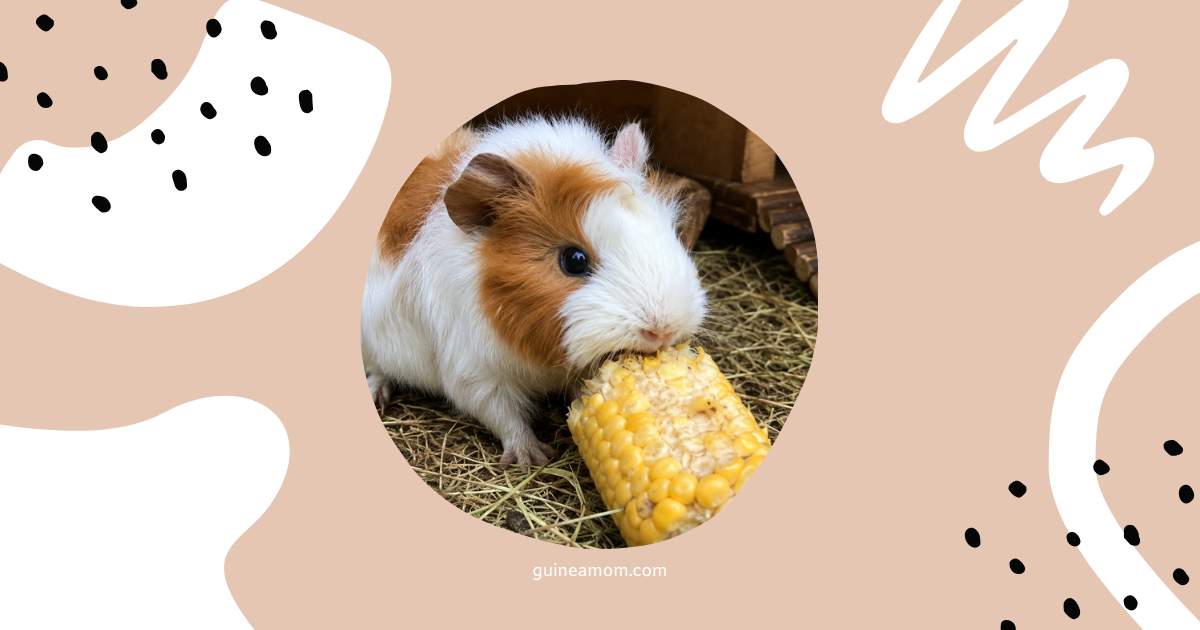
Kernels aren’t toxic, and many pigs love gnawing them straight off the cob — but keep portions small and occasional. Some vets advise skipping kernels entirely for pigs that are overweight, have sensitive stomachs, a history of soft stool, or dental problems.
Frequency: a small amount, occasionally — not a daily food.
❌ The cob itself — remove it
The hard, woody inner cob is not food. Guinea pigs generally won’t eat it, but it shouldn’t be left in the cage as a chew item — if pieces were swallowed, there’s a genuine intestinal blockage risk. Let your pig nibble the kernels off, then take the bare cob away.
(The small green stalk nub at the end of the cob is safe to chew, and nutritionally similar to the husks.)
Benefits of Corn for Guinea Pigs
The plant offers a few genuine positives:
- Fiber — especially from the husks and silk, supporting healthy digestion.
- Some vitamin C — though far less than bell peppers or leafy greens, so don’t rely on corn for it.
- Antioxidants, plus some vitamin B6, folate, and potassium.
- Enrichment and enjoyment — guinea pigs genuinely love unwrapping and shredding corn husks (more on that below).
Honestly, corn’s biggest value is fiber and fun rather than nutrition — it’s a nice extra, not a nutritional necessity.
How to Serve Corn on the Cob
- Buy fresh corn with the husks still on if you can — farmers’ markets and in-season supermarket corn often have them intact.
- Peel away and discard the outer husks (pesticide/dirt exposure), keeping the cleaner inner leaves.
- Wash the husks, silk, and cob thoroughly. Organic is ideal.
- Serve raw and fresh, at room temperature.
- Offer a small section of cob with a few kernels, plus husks and silk.
- Remove the bare cob once the kernels are gone.
- Take away uneaten pieces after a few hours so nothing spoils in the cage.
Corn Husks Make Great Free Enrichment
Here’s a lovely bonus. Corn husks aren’t just food — they’re excellent enrichment, and guinea pigs adore them. Ideas:
- Hang husks from the side of the cage so your pig has to pull and tug at them.
- Braid several husks together for a sturdier, longer-lasting toy.
- Tie a bundle into a ball and let your pigs push it around and shred it.
- Wrap a treat inside a folded husk so they have to unwrap it.
It’s free, it uses a part that usually gets thrown away, and it taps right into their natural foraging and chewing instincts.
What NOT to Feed
Only fresh, raw corn is suitable. Never give your guinea pig:
- Cooked corn of any kind — their digestive systems can’t handle cooked food.
- Canned corn — high in salt and preservatives.
- Buttered, salted, or seasoned corn.
- Popcorn — far too processed, and a choking hazard.
- Corn chips, tortillas, or any corn-based snack food — high in salt and flour, and completely unsuitable.
- Frozen corn (or anything served fridge-cold).
- The bare woody cob left as a chew toy.
Special Cautions
- Baby guinea pigs: skip corn kernels unless your vet advises otherwise.
- Senior pigs, overweight pigs, or those with digestive or dental problems: be extra cautious with kernels, or skip them and stick to husks and silk.
- Introduce gradually — offer a small amount of a new part first and check droppings and appetite the next day.
When to Call a Vet
Contact your vet if, after eating corn, your guinea pig has diarrhea lasting more than a few hours, stops eating (an emergency in guinea pigs), produces few or no droppings, or seems bloated, hunched, or in pain. If you suspect they’ve swallowed a piece of the hard cob, contact your vet promptly.
Key Takeaways
- Yes, guinea pigs can eat corn on the cob — but the part matters enormously.
- Husks (inner leaves) and silk are the best parts — high fiber, low sugar, safe several times a week.
- Kernels are starchy and sugary — a small, occasional treat only, and best skipped for overweight, senior, or sensitive pigs.
- Remove the bare woody cob — it’s not food and poses a blockage risk if chewed and swallowed.
- Always fresh and raw — never cooked, canned, buttered, salted, popped, or corn-based snack foods.
- Peel off the outer husks (pesticide exposure) and wash everything thoroughly; organic is ideal.
- Corn husks make brilliant free enrichment — hang, braid, or bundle them for your pigs to shred.
- Corn’s real value is fiber and fun, not nutrition — use bell peppers and leafy greens for vitamin C.
This article is intended as general educational information for guinea pig owners and is not a substitute for professional veterinary advice. Introduce all new foods gradually, and consult a qualified veterinarian experienced with guinea pigs if your pig shows digestive upset or any signs of illness.