Can Guinea Pigs Eat Broccoli?
Yes — it’s a vitamin C powerhouse. But it’s also high in calcium and gassy, so keep it to a few times a week.
Yes, guinea pigs can eat broccoli — and nutritionally it’s one of the best vegetables you can offer, being a genuine vitamin C powerhouse (around 89mg per 100g — nearly double a guinea pig’s daily requirement in a single serving, and almost twice as much as an orange). Every part is safe: florets, stalk, and leaves. But two things mean it’s a few-times-a-week food, not a daily one: broccoli is high in calcium (bladder stone risk) and, as a cruciferous vegetable, it causes gas and bloating — which matters because guinea pigs can’t burp or easily pass wind. A safe serving is about one to two small florets (plus a leaf or two), three to four times a week. Always serve it raw, introduce it slowly, and watch for bloating. Here’s the full guide.
Is Broccoli Good for Guinea Pigs?
Yes — broccoli is genuinely nutritious. Its standout feature is vitamin C: at roughly 89mg per 100g, it’s one of the richest vegetable sources you can give, and since guinea pigs can’t make their own vitamin C (and need it daily to prevent scurvy), that’s a real benefit. Broccoli also provides fiber (more than lettuce or bell pepper), plus vitamins A, K, and B6, potassium, and antioxidants — and it’s low in sugar (about the same as cucumber).
You can feed all parts — the florets, the crunchy stalk, and the leaves — and the tough texture is good for dental wear too. So why not daily? Two reasons.
Why Broccoli Must Be Limited
1. It’s high in calcium. Broccoli contains around 47mg of calcium per 100g — not as much as parsley or kale, but enough that daily feeding raises the risk of bladder stones and bladder sludge, which guinea pigs are prone to. (It also contains some oxalates, which compound this.) This is the main reason to rotate broccoli rather than feed it every day.
2. It causes gas and bloating. Broccoli is a cruciferous (brassica) vegetable, and like its relatives (cauliflower, cabbage, Brussels sprouts) it contains compounds — raffinose and sulfur compounds — that produce gas. Here’s why that’s more serious for guinea pigs than for us: guinea pigs can’t burp and can’t easily pass wind, so trapped gas causes genuinely painful, and potentially dangerous, bloating. This is why you introduce broccoli slowly and watch closely.
How Much Broccoli Can a Guinea Pig Eat?
Sources vary slightly, but a safe approach:
- Portion: about one to two small florets (roughly 15–25g), plus a leaf or two if you like — or think “half a full-size floret with a bit of stalk” per pig.
- Frequency: three to four times a week at most — and daily is not recommended because of the calcium.
- Rotate with lower-calcium vegetables like bell pepper and cucumber on the other days.
- Introduce slowly — start with a tiny piece the first time and check for gas or soft stools before offering more.
A note of caution: some guinea pig rescues have seen broccoli (and its cruciferous relatives) cause bloat first-hand, and advise being especially careful — or avoiding it — for pigs prone to digestive trouble. If your pig gets gassy or uncomfortable after broccoli, it’s fine to simply leave it off the menu; the vitamin C is easily replaced by bell peppers.
The Different Parts
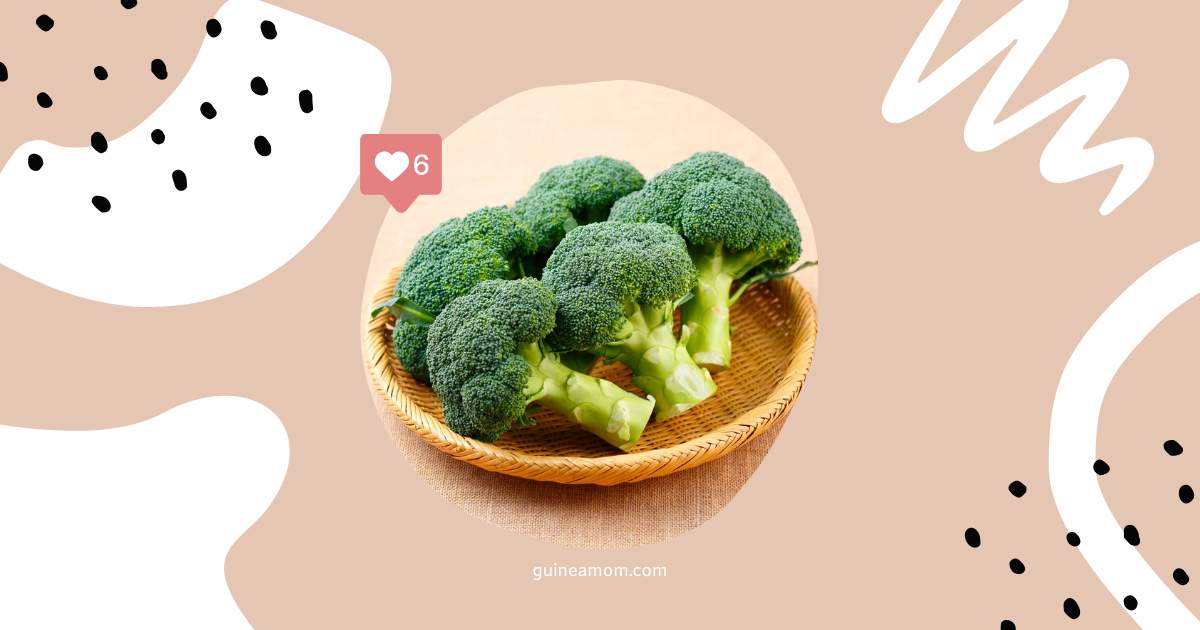
- Florets — the classic part; fine in the portions above.
- Stalk — safe and crunchy (good for teeth); slice thick stems into thin rounds, as chunky pieces can be a choking hazard.
- Leaves — safe, slightly lower in calcium than the florets, and many pigs enjoy them.
How to Serve Broccoli Safely
- Wash thoroughly under running water (organic is ideal).
- Serve raw — guinea pigs prefer it, and cooked veg isn’t suitable for them.
- Cut into small pieces, slicing any thick stalk into thin rounds.
- Serve at room temperature, not fridge-cold.
- Introduce gradually — a tiny piece first, watching for gas, bloating, or soft stools over the next day.
- Make sure hay is always available — constant forage keeps the digestive system moving and helps prevent bloat.
- Remove uneaten broccoli after a few hours before it spoils.
What NOT to Feed
- Cooked broccoli — harder to digest and less nutritious; raw only.
- Frozen or fridge-cold broccoli.
- Seasoned, salted, or buttered broccoli.
- Large amounts at once — the fast track to painful gas.
- Broccoli for a pig that’s clearly sensitive to it — some just can’t tolerate cruciferous veg.
Signs You’ve Fed Too Much
Watch for these and cut back or stop if you see them:
- A bloated, swollen, or hard tummy
- Reduced appetite or reluctance to move
- Soft stools or diarrhea
- Signs of discomfort or pain
When to Call a Vet
Contact your vet if, after eating broccoli, your guinea pig shows significant bloating, stops eating (a genuine emergency in guinea pigs), produces few or no droppings, has diarrhea lasting more than a few hours, or seems in pain or lethargic. Bloat can become serious quickly in guinea pigs, so don’t wait it out if your pig seems genuinely uncomfortable.
Key Takeaways
- Yes — broccoli is one of the most nutritious vegetables for guinea pigs, and a vitamin C powerhouse (~89mg/100g, nearly double their daily need).
- All parts are safe — florets, stalk (sliced thin), and leaves (which are lower in calcium).
- Limit it to a few times a week (about 1–2 small florets, 3–4× weekly) because it’s high in calcium (bladder stone risk) and causes gas (guinea pigs can’t burp).
- Rotate with low-calcium veg like bell pepper and cucumber on off days.
- Introduce slowly and watch for bloating — some pigs tolerate cruciferous veg poorly, and it’s fine to skip it for them.
- Serve raw, washed, cut small, at room temperature, and always keep hay available.
- Never feed cooked, frozen, or seasoned broccoli, or large amounts at once.
- See a vet for significant bloating, loss of appetite, or ongoing diarrhea.
This article is intended as general educational information for guinea pig owners and is not a substitute for professional veterinary advice. Introduce all new foods gradually, and consult a qualified veterinarian experienced with guinea pigs if your pig shows bloating, digestive upset, or any signs of illness.