
How Long Can a Guinea Pig Go Without Water?
Not long at all — around 12 to 24 hours before it becomes dangerous. Here’s why water is so critical, and what to do.
A guinea pig should never go more than about 12 to 24 hours without water — and ideally should have fresh water available at all times. Guinea pigs dehydrate quickly, and beyond roughly a day without drinking, they’re at serious risk of dehydration, urinary problems, kidney issues, and digestive trouble — because their dry, fibrous, hay-based diet actually depends on plenty of fluid to digest properly. While a guinea pig might technically survive past 48 hours, it would be suffering and in danger well before then, so that’s never acceptable. An adult guinea pig needs roughly 80–100 ml of water a day (more if pregnant, nursing, or in hot weather). The bottom line: water is critical and constant for guinea pigs — don’t risk leaving them without it. Here’s the full picture.
How Long Is Too Long?
The safe answer is simple: guinea pigs need constant access to fresh water, and shouldn’t be without it for more than about 12 to 24 hours.
- Up to ~12 hours without water (e.g., overnight) — generally okay if unavoidable, though not ideal.
- Beyond 12–24 hours — this is the danger zone, where dehydration sets in and health risks climb quickly.
- Past 48 hours — a guinea pig may still be alive, but would be seriously dehydrated and suffering; this is never acceptable and can be fatal.
Unlike some animals, guinea pigs have little margin for error here — they’re small, they dehydrate fast, and their bodies rely on a steady fluid supply. So the practical rule isn’t “how long can they last” — it’s “always keep fresh water available.“
Why Water Is So Critical for Guinea Pigs
It’s not just about thirst — water is tied directly to a guinea pig’s core health in a few important ways:
Their digestion depends on it. Guinea pigs eat a dry, high-fiber diet (mostly hay), and their digestive system needs plenty of fluid to process all that fiber and keep food moving through the gut. Without enough water, digestion slows — and a sluggish or stalled gut (GI stasis) is a genuine, potentially fatal emergency in guinea pigs.
It protects their urinary system. Guinea pigs are prone to bladder stones, bladder sludge, and urinary tract problems, and good hydration helps flush the urinary system and reduce that risk. Dehydration makes urine more concentrated and these problems more likely.
It supports kidney function and overall health. Like any animal, guinea pigs need water for healthy kidneys, circulation, and basically every bodily process. Dehydration quickly affects their whole system.
How Much Water Does a Guinea Pig Need?
As a guide, a healthy adult guinea pig drinks roughly 80–100 ml of water per day — though this varies:
- More in hot weather, or on a dry diet (lots of hay and pellets, fewer fresh vegetables).
- More for pregnant or nursing sows, who have higher needs.
- Less if they eat lots of water-rich vegetables (like cucumber and leafy greens), which provide moisture through food — this is perfectly normal and healthy.
Rather than counting millilitres, the key is to always have fresh water available and to know your pig’s normal drinking pattern, so you notice changes.
The Hidden Danger: Water Bottles That Fail
Here’s a crucial, often-overlooked point: a guinea pig can end up without water even when the bottle looks full. Ball-bearing bottle nozzles frequently airlock, stick, or stop flowing, so the pig can’t actually drink. This is a genuinely common cause of accidental dehydration — the owner thinks there’s plenty of water, but none is coming out.
A good no-drip water bottle is far less likely to stick or leak — see our top picks in Best Water Bottles for Guinea Pigs.
To avoid this:
- Test the bottle yourself regularly — press the ball and check water flows freely.
- Offer two water sources if you can — e.g., two bottles, or a bottle plus a heavy ceramic bowl — so there’s a backup if one fails.
- Check and refresh water daily.
- In hot weather, keep the water cool and check it more often, since guinea pigs are especially vulnerable to heat.
Signs of Dehydration to Watch For
If you’re worried your guinea pig hasn’t been drinking, watch for these signs of dehydration:
- Skin that’s slow to snap back — gently pinch the loose skin over the shoulders; in a hydrated pig it springs back instantly, but if it stays “tented,” they may be dehydrated.
- Lethargy and low energy
- Sunken or dull eyes
- Dry or sticky gums and mouth
- Thick, dark, or reduced urine
- Loss of appetite
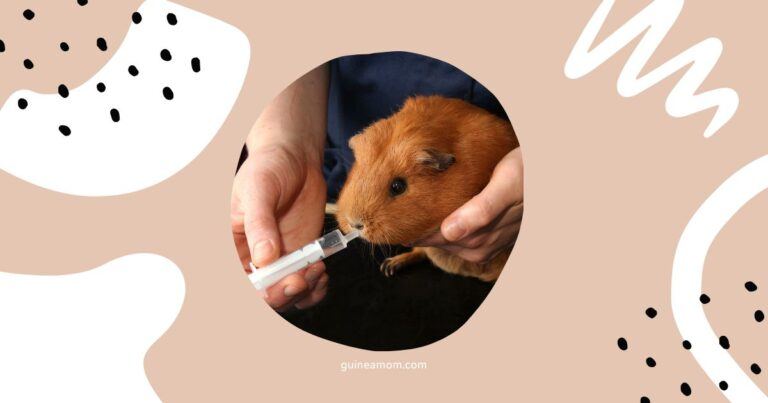
If you spot these, offer water immediately (check the bottle works, try a bowl, offer water-rich veggies) and contact your vet — dehydration is dangerous and often signals illness. For the full list, see Signs of Dehydration in Guinea Pigs.
What About Food?
It’s worth knowing, since food and water go together: guinea pigs also shouldn’t go more than about 24 hours without food. They need to eat almost constantly to keep their gut moving, so a pig that stops eating is heading toward the same dangerous GI stasis. In fact, a guinea pig that has stopped eating or drinking is always an emergency — don’t wait it out; contact a vet.
What to Do If You’ll Be Away
Because guinea pigs can’t safely go without water (or food) for long, don’t leave them alone for more than about a day. See Can I Leave My Guinea Pig Alone for 2 Days? For anything longer — a weekend or trip — arrange for someone to visit at least once a day to refill water, check the bottle is working, top up food, and make sure your pigs are well. A failed water bottle over a two-day absence, with no one checking, is exactly the kind of avoidable tragedy this article is meant to prevent.
Key Takeaways
- A guinea pig should never go more than about 12–24 hours without water — and ideally should have fresh water available at all times.
- They dehydrate quickly — beyond ~24 hours risks serious dehydration, urinary and kidney problems, and digestive trouble; past 48 hours can be fatal.
- Water is critical because their dry, high-fiber diet depends on fluid to digest, and good hydration protects against bladder stones and supports the kidneys.
- Adults need roughly 80–100 ml a day (more when pregnant, nursing, or hot; less if eating lots of watery veg).
- Watch for failed water bottles — airlocked nozzles are a common hidden cause of dehydration; test the bottle and offer a backup source.
- Know the dehydration signs (skin slow to snap back, lethargy, sunken eyes, sticky gums, dark urine) and see a vet if you spot them.
- They also shouldn’t go ~24 hours without food — a pig that stops eating or drinking is always an emergency.
- Don’t leave them alone longer than about a day — arrange daily care for any longer absence.
This article is intended as general educational information for guinea pig owners and is not a substitute for professional veterinary advice. If your guinea pig stops drinking or eating, or shows signs of dehydration, consult a qualified veterinarian experienced with guinea pigs promptly.