Can Guinea Pigs Eat Tomatoes?
Yes — the ripe red fruit only. But the leaves, stems, and unripe tomatoes are genuinely toxic.
Yes, guinea pigs can eat ripe tomatoes — in small amounts, a couple of times a week. Ripe tomato flesh is relatively low in sugar, high in water, and provides vitamin C, vitamin K, folate, and potassium. But this is one food where the part matters enormously: the leaves, stems, vines, and unripe (green) tomatoes are toxic to guinea pigs. They belong to the nightshade family and contain tomatine (a glycoalkaloid poison) which, in an animal as small as a guinea pig, can cause serious illness or worse. The simple rule: if it’s green, don’t feed it. Portion is about one cherry tomato (or an equivalent small chunk) per pig, and because tomatoes are acidic, overfeeding can cause painful mouth sores. Here’s the full guide.
⚠️ First, the Toxic Parts
This is the most important thing on this page, so it comes first.
Never feed your guinea pig:
- Tomato leaves
- Tomato stems and vines
- The green leafy “crown” on top of the tomato
- Unripe / green tomatoes
Tomatoes are members of the nightshade family (Solanaceae), and the green parts of the plant contain tomatine — and possibly solanine — which are glycoalkaloid poisons. These are concentrated in the leaves and stems, and also present in unripe fruit. The tiny amounts that don’t bother a human can genuinely make a guinea pig ill, because they’re so much smaller.
If you buy tomatoes on the vine, remove every green part before offering any to your pigs. And if your guinea pig has eaten tomato leaves, stems, or vine, contact your vet straight away — don’t wait for symptoms to appear, since early intervention is far more effective in small animals.
A quick note on green varieties: some tomatoes (like green beefsteak) are green when fully ripe. These tend to be more acidic and tart, so it’s simplest and safest to stick to ripe red tomatoes for your guinea pigs.
What Parts Are Safe?
The good news: the part you actually want to feed is fine.
- ✅ Ripe red tomato flesh — safe in small amounts
- ✅ Tomato seeds — perfectly safe (no need to remove them)
- ✅ Cherry, grape, plum, and standard tomatoes — all fine when ripe
- ❌ Everything green — leaves, stems, vine, crown, and unripe fruit
Benefits of Tomatoes
Ripe tomatoes have genuine plus points:
- Vitamin C — essential for guinea pigs, who can’t produce their own.
- Vitamin K, folate (B9), and potassium.
- Antioxidants, including lycopene.
- Relatively low in sugar compared to most fruits — a point in their favor.
- High water content — nicely hydrating, especially in summer or for pigs who don’t drink much.
That said, tomatoes are not very fibrous and shouldn’t be a primary vitamin C source — leafy greens and bell peppers are better for that, and hay is where the fiber must come from.
How Much Tomato Can a Guinea Pig Eat?
Keep portions small:
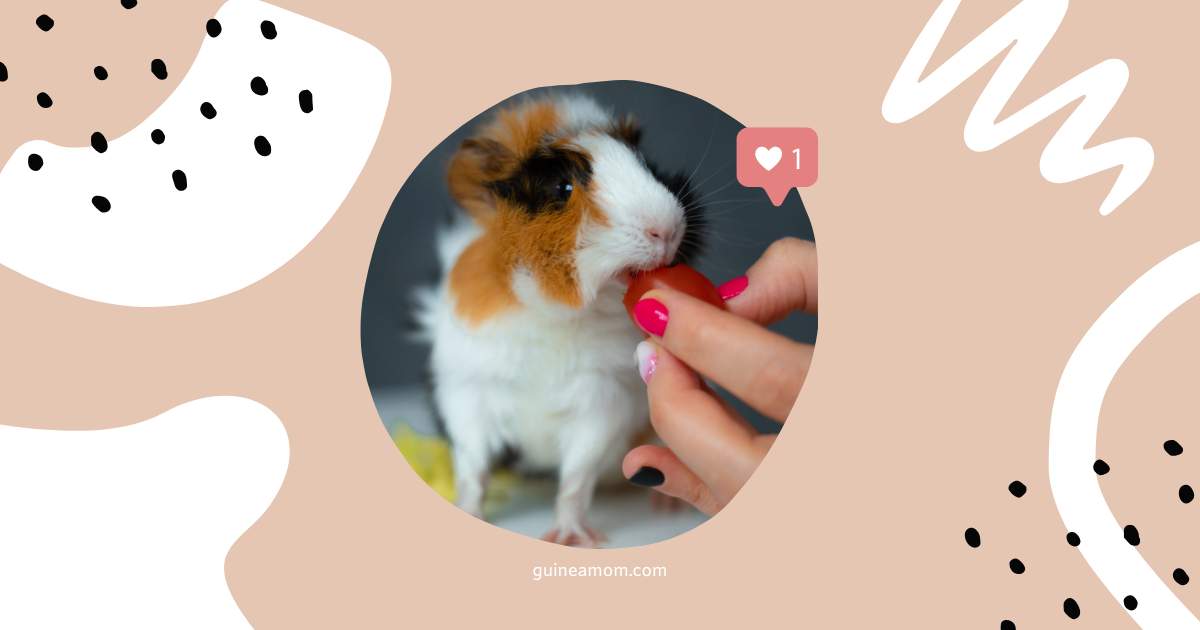
- Portion: about the size of one cherry tomato per guinea pig. A whole small cherry tomato works; from a larger tomato, cut a chunk of about that size.
- Frequency: once or twice a week is a sensible standard (some owners offer small amounts up to three times weekly).
- Rotate with other vegetables — tomatoes add variety, but dark leafy greens should be the daily staple.
Not for babies. Young guinea pigs shouldn’t have tomato — their developing digestive systems don’t handle it well. Wait until they’re mature, then introduce a tiny amount.
Why Overfeeding Causes Problems
Two specific issues to know about:
1. Mouth sores (cheilitis). Tomatoes are acidic, and overfeeding can cause painful sores and crusty patches around a guinea pig’s mouth and lips — a condition called cheilitis. It can become infected if left untreated. This is the most distinctive tomato-specific risk.
2. Diarrhea and digestive upset. As with any fruit or watery vegetable, too much at once can cause loose stools or diarrhea, which in a guinea pig can quickly lead to dehydration.
How to Serve Tomatoes Safely
- Choose fully ripe, red tomatoes — never green or unripe ones.
- Remove all green parts — the crown, stem, and any vine.
- Wash thoroughly to remove pesticide residue.
- Serve raw and fresh, at room temperature.
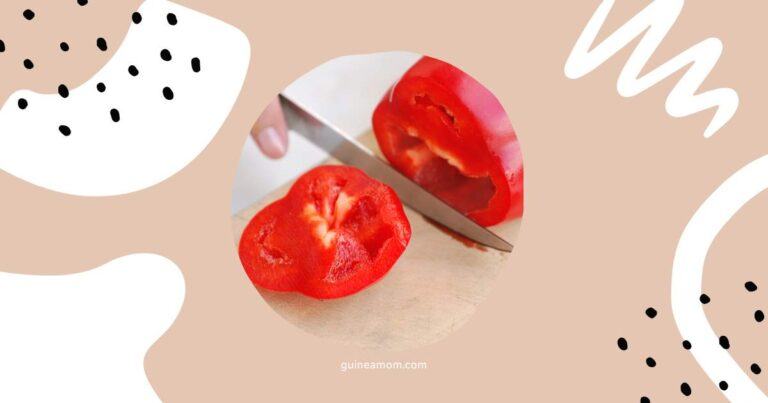
- Small tomatoes (cherry, grape) can be given whole; larger tomatoes should be cut into a small piece.
- Introduce gradually — offer a tiny amount first and watch for 24 hours before making it a regular treat.
- Remove uneaten pieces after a few hours so they don’t spoil.
Never feed: cooked tomatoes, tinned/canned tomatoes, tomato sauce, ketchup, sun-dried tomatoes, or anything with added salt, sugar, or seasoning.
A Harmless Side Effect
One small thing to expect: tomatoes can stain your guinea pig’s fur and bedding. It’s completely harmless — the stains simply grow out over time — but don’t be alarmed if your pig ends up with a pink chin after a tomato treat!
When to Call a Vet
Contact your vet immediately if your guinea pig has eaten tomato leaves, stems, or vine — don’t wait for symptoms.
Also call your vet if, after eating tomato, your pig shows:
- Lethargy or sits hunched and unwilling to move
- Diarrhea lasting more than a few hours
- Loss of appetite or refusal to drink (an emergency in guinea pigs)
- Mouth sores, crusty patches around the lips, or drooling (possible cheilitis)
- Few or no droppings, bloating, or signs of pain
Key Takeaways
- Yes, guinea pigs can eat ripe red tomato flesh — in small amounts, once or twice a week.
- ⚠️ The leaves, stems, vines, and unripe green tomatoes are TOXIC — they contain tomatine, a glycoalkaloid poison. If it’s green, don’t feed it.
- Contact your vet immediately if your pig eats any green part of the tomato plant.
- The seeds are safe, and cherry, grape, plum, and standard ripe tomatoes are all fine.
- Portion: about one cherry tomato (or equivalent) per pig; keep leafy greens as the daily staple.
- Tomatoes are acidic — overfeeding can cause painful mouth sores (cheilitis) as well as diarrhea.
- Serve raw, ripe, washed, and at room temperature — never cooked, canned, sauced, or seasoned.
- Not suitable for baby guinea pigs, and staining of the fur is harmless.
This article is intended as general educational information for guinea pig owners and is not a substitute for professional veterinary advice. If your guinea pig eats any green part of a tomato plant, or shows digestive upset or mouth sores, consult a qualified veterinarian experienced with guinea pigs promptly.