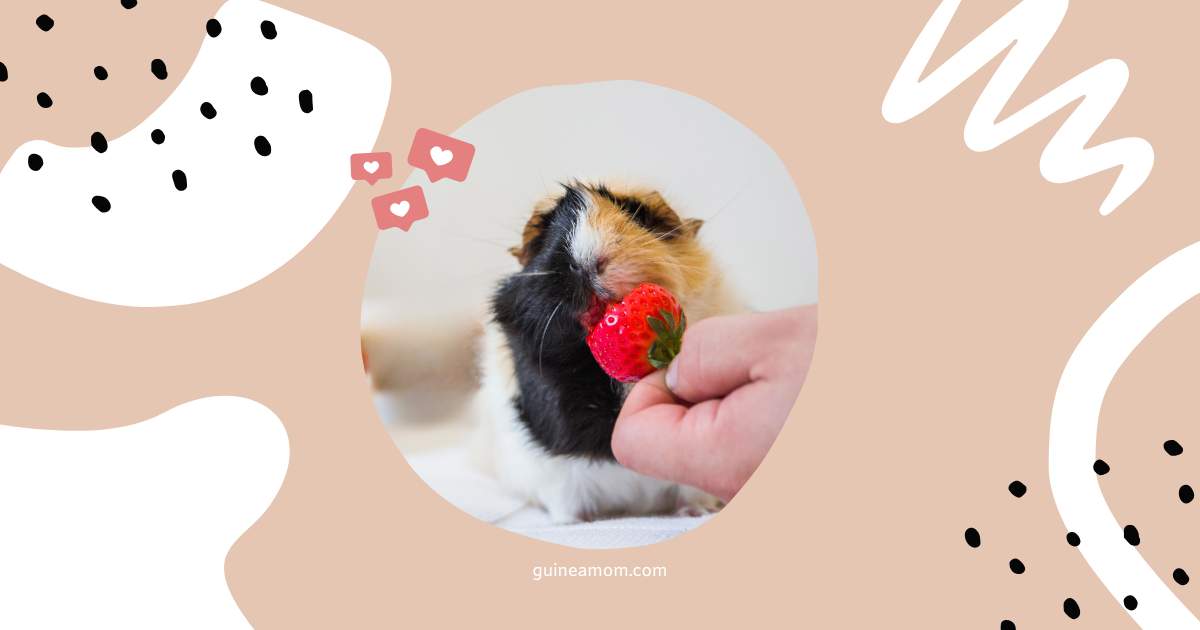
Can Guinea Pigs Eat Strawberries?
Yes — and they’re one of the best fruits you can give. Here’s why, plus the safe portion.
Yes, guinea pigs can eat strawberries — and they’re genuinely one of the best fruit choices for them. Strawberries are exceptionally high in vitamin C (around 59mg per 100g — roughly six to seven times more than blueberries and about twenty times more than grapes) while being surprisingly low in sugar for a fruit, at about 5%. They also provide fiber and antioxidants. Even better: the green tops and leaves are safe too — and are actually healthier than the berry itself, being lower in sugar and higher in fiber. Still, strawberries are a treat, not a staple: serve about one small strawberry (or a few slices) per pig, once or twice a week. Always wash them thoroughly — strawberries are among the most heavily sprayed fruits. Here’s the full guide.
Why Strawberries Are One of the Best Fruits for Guinea Pigs
Most fruit gets limited because of sugar. Strawberries earn their spot near the top of the list because they win on both counts that matter:
Very high in vitamin C. Guinea pigs can’t produce their own vitamin C and need a daily supply or they develop scurvy. Strawberries contain roughly 59mg of vitamin C per 100g — an impressive amount, and far ahead of other popular fruit treats. Compared with blueberries, strawberries have about six to seven times the vitamin C; compared with grapes, roughly twenty times.
Low in sugar (for a fruit). At around 5% sugar, strawberries have roughly half the sugar of blueberries and about a third that of grapes — similar to a carrot. That makes them a much gentler choice for a guinea pig’s sugar-sensitive digestive system.
Add fiber, antioxidants (including anthocyanins and quercetin), and high water content for hydration, and you have a genuinely good treat.
One important caveat: despite all this, strawberries still shouldn’t be a daily food. For daily vitamin C, bell peppers remain the better choice — higher in vitamin C, lower in sugar, and safe every day.
The Tops and Leaves Are Safe Too — and Even Better
Here’s a lovely bonus that many owners don’t know: the green strawberry tops and leaves are perfectly safe for guinea pigs — and are arguably healthier than the berry itself.
The greens are lower in sugar, higher in fiber, and packed with antioxidants, and their tough texture is good for dental wear. So there’s no need to trim the tops off before serving.
(This is a nice contrast with tomatoes, where the green top is toxic — with strawberries, the green part is the healthy bit!)
A clever tip: if you want to give your pig a treat while minimizing sugar, offer the green top with just a small amount of fruit attached. They get the fun and flavor with far less sugar.
The tiny seeds on the outside are also completely safe — no need to do anything about them. Just remove any tough, woody stem, which could be a choking hazard.
How Many Strawberries Can a Guinea Pig Eat?
Keep it modest:
- Portion: about one small strawberry, or a few slices of a larger one, per guinea pig. (Some vets suggest being even more conservative — around a thumbnail-sized piece per sitting.)
- Frequency: once or twice a week.
- Rotate with other fruits and don’t stack fruit treats in the same week.
- Overall: all fruit should stay under about 5% of the diet, behind hay (~80%), vegetables, and pellets.
Not for baby guinea pigs — their digestive systems are still developing and sugar can cause problems. And feed less (or skip fruit) for overweight pigs or those with digestive issues.
How to Serve Strawberries Safely
- Wash thoroughly. This matters more with strawberries than most fruit — they’re among the most heavily pesticide-sprayed crops. Organic is ideal if you can get it.
- Choose fresh, ripe berries — never spoiled or moldy.
- Leave the green top on if you like (it’s healthy!), but remove any tough, woody stem.
- Slice into small pieces for easier eating.
- Serve raw and at room temperature — not fridge-cold.
- Introduce gradually — a small piece first, then check droppings and appetite the next day.
- Remove uneaten pieces after a couple of hours, since berries spoil quickly.
What NOT to Feed
Only fresh, raw strawberries:
- No canned strawberries — added sugar and preservatives.
- No frozen strawberries (or anything served cold) — can cause digestive upset. Thaw to room temperature if needed.
- No dried strawberries with added sugar — drying concentrates sugar enormously.
- No strawberry jam, syrup, juice, or any sweetened product.
- No moldy or spoiled berries.
Signs You’ve Fed Too Much
Watch for these and cut back if you see them:
- Soft stools or diarrhea
- Reduced appetite or less interest in hay
- Bloating or signs of discomfort
- Weight gain over time
When to Call a Vet
Contact your vet if, after eating strawberries, your guinea pig has diarrhea lasting more than a few hours, stops eating (a genuine emergency in guinea pigs), produces few or no droppings, or seems bloated, hunched, or in pain.
Key Takeaways
- Yes — strawberries are one of the best fruits for guinea pigs, being very high in vitamin C and relatively low in sugar.
- Vitamin C: ~59mg per 100g — roughly 6–7× that of blueberries and ~20× that of grapes.
- Sugar: only about 5% — around half that of blueberries and a third that of grapes.
- The green tops and leaves are safe and even healthier than the berry — lower sugar, more fiber, and good for dental wear (just remove tough stems).
- Serve one small strawberry or a few slices per pig, once or twice a week, keeping all fruit under ~5% of the diet.
- Wash very thoroughly — strawberries are heavily sprayed; organic is ideal.
- Never feed canned, frozen, sugared, dried-with-sugar, jam, or juice; and skip strawberries for baby guinea pigs.
- For daily vitamin C, bell peppers are still better — lower sugar and safe every day.
This article is intended as general educational information for guinea pig owners and is not a substitute for professional veterinary advice. Introduce all new foods gradually, and consult a qualified veterinarian experienced with guinea pigs if your pig shows digestive upset or any signs of illness.