Can Guinea Pigs Eat Pineapple?
Yes — a tangy, vitamin-C-rich treat in small amounts. Just mind the sugar and acidity, and skip the skin and core.
Yes, guinea pigs can eat pineapple — as a small, occasional treat. It’s a genuinely good source of vitamin C (which guinea pigs need daily), plus fiber, antioxidants, and lots of water. But pineapple is both sugary and acidic, so overfeeding can cause diarrhea, digestive upset, and painful mouth sores. A safe serving is about one small (1-inch) cube of flesh per guinea pig, once a week. Always use fresh, ripe pineapple — never canned, dried, or juiced — and remove the tough skin, core, and leaves, feeding only the soft flesh. Reassuringly, pineapple is low in calcium and oxalates, so it doesn’t carry the bladder-stone concern that many foods do. Here’s the full guide.
Is Pineapple Safe for Guinea Pigs?
Yes — fresh pineapple flesh is safe and non-toxic, and most guinea pigs love its sweet, tangy flavor. It even has a real nutritional upside: it’s one of the better fruit sources of vitamin C. But like all fruit, it’s a treat, not a food group, and pineapple has two characteristics — sugar and acidity — that mean portions must stay genuinely small.
Why Pineapple Must Be Limited
Sugar. Pineapple contains around 11g of sugar per 100g — sugary enough that too much disrupts a guinea pig’s gut bacteria, causing diarrhea and digestive upset, and over time contributing to obesity and even diabetes. Guinea pigs are built for a low-sugar, high-fiber diet, so their systems don’t handle sugar well.
Acidity. Pineapple is quite acidic, and this is its distinctive risk: too much can cause painful sores around a guinea pig’s mouth and lips, as well as irritating the digestive tract. (This is the same acidity concern as with oranges and tomatoes.)
The good news: pineapple is low in calcium and oxalates, so unlike parsley, spinach, or kale, it’s unlikely to contribute to bladder stones. Its issues are sugar and acid, not minerals.
How Much Pineapple Can a Guinea Pig Eat?
Keep it small:
- Portion: about one small cube (roughly 1 inch / 2.5cm) of pineapple flesh per guinea pig.
- Frequency: once a week. (You can split one cube’s worth across two days, but don’t exceed roughly a cube per week.)
- Don’t stack sugary fruit — avoid pineapple and other sweet fruit (like grapes or banana) on the same day.
- Overall: keep all fruit under about 5% of the diet.
Not for baby guinea pigs — wait until they’re at least a few weeks old and settled on solid food, since the acidity and sugar can upset a developing tummy. And feed less or skip it for overweight pigs or those with digestive issues.
Skin, Core, and Leaves: Remove Them
Only the soft flesh is suitable:
- ❌ Skin — tough, spiky, and hard to digest; never feed it.
- ❌ Core — very tough and fibrous; not toxic, but a guinea pig can’t digest it properly, which can cause impaction and stomach problems.
- ❌ Leaves — tough and unsuitable.
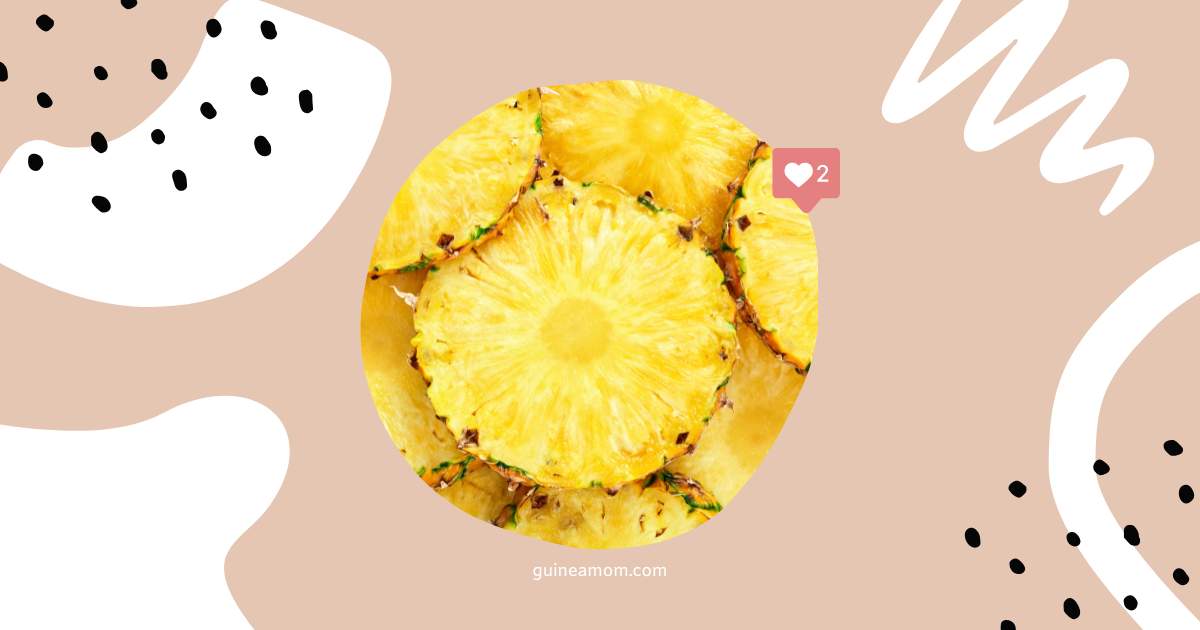
- ✅ Flesh — the soft yellow part, cut into a small cube, is the only bit to serve.
How to Serve Pineapple Safely
- Choose a fresh, ripe pineapple — not canned, dried, or pre-cut in syrup.
- Remove the skin, core, and leaves completely.
- Cut a small cube of flesh and wash it.
- Serve raw and fresh, at room temperature.
- Introduce gradually — offer a tiny piece first, then check droppings and their mouth area over the next day.
- Remove uneaten pineapple after a couple of hours, as it spoils and attracts flies.
What NOT to Feed
- Canned pineapple — packed in syrup, far too much sugar.
- Dried pineapple — sugar hugely concentrated, often with added sugar.
- Pineapple juice — concentrated sugar and acid, no fiber.
- The skin, core, or leaves.
- Anything sweetened, cooked, or processed.
Does Pineapple Have Benefits?
Yes, in moderation:
- Vitamin C — one of the better fruit sources, helping prevent scurvy.
- Fiber — supports digestion.
- Antioxidants — including bromelain and others.
- High water content — hydrating, nice in warm weather.
That said, for daily vitamin C, bell peppers are still the better choice — high in vitamin C without the sugar and acid. Treat pineapple as a tangy occasional bonus.
When to Call a Vet
Contact your vet if, after eating pineapple, your guinea pig has diarrhea lasting more than a few hours, stops eating (a genuine emergency in guinea pigs), produces few or no droppings, develops mouth sores or crusty patches around the lips, or seems bloated, hunched, or in pain.
Key Takeaways
- Yes — guinea pigs can eat pineapple as a small, occasional treat; it’s a good fruit source of vitamin C, plus fiber and antioxidants.
- It’s sugary and acidic — too much causes diarrhea, digestive upset, and painful mouth sores.
- Serve one small (1-inch) cube of flesh per pig, once a week, and keep all fruit under ~5% of the diet.
- Remove the skin, core, and leaves — feed only the soft flesh (the core can cause impaction).
- Use fresh, ripe pineapple only — never canned, dried, or juiced.
- It’s low in calcium and oxalates, so unlike many foods it won’t contribute to bladder stones.
- Not for baby guinea pigs, and skip it for overweight or digestion-sensitive pigs.
- For daily vitamin C, bell peppers are better — enjoy pineapple as an occasional treat.
This article is intended as general educational information for guinea pig owners and is not a substitute for professional veterinary advice. Introduce all new foods gradually, and consult a qualified veterinarian experienced with guinea pigs if your pig shows digestive upset, mouth sores, or any signs of illness.