Can Guinea Pigs Eat Iceberg Lettuce?
The short answer is: you shouldn’t. Here’s why — and which lettuces to feed instead.
Iceberg lettuce is best avoided. It isn’t acutely poisonous, but it’s the one lettuce that guinea pig experts consistently advise against — for three good reasons: it has almost no nutritional value (it’s mostly water), its very high water content can cause diarrhea, which in guinea pigs can quickly lead to dangerous dehydration, and it fills them up without feeding them, meaning less hay and fewer nutrients. Add the fact that there are much better lettuces available at the same price — romaine, butterhead, green leaf, red leaf, and little gem — and the honest conclusion is that iceberg offers nothing your guinea pig needs. If your pig has snatched a bit, don’t panic — it’s not toxic. But there’s no good reason to feed it. Here’s the full explanation.
Is Iceberg Lettuce Bad for Guinea Pigs?
Let’s be precise, because there’s a difference between “toxic” and “not worth feeding.”
Iceberg lettuce is not poisonous. If your guinea pig eats a small piece, they will almost certainly be fine — so no need to panic if a leaf ends up in their bowl.
But it’s genuinely not recommended, and most guinea pig specialists advise skipping it entirely. The reasoning is simple: it carries real risks while offering essentially no benefit — which makes the risk-benefit calculation completely one-sided. When romaine costs about the same and is vastly better for them, there’s just no argument for iceberg.
Why Iceberg Lettuce Is a Poor Choice
1. Almost no nutritional value. Iceberg is famously “mostly water and air.” It contains only minimal amounts of the vitamins and minerals guinea pigs need — and critically, very little vitamin C, which guinea pigs must get daily from their food. Feeding iceberg means using up a vegetable portion that could have delivered real nutrition.
2. High water content → diarrhea. This is the main practical risk. All that water can disrupt a guinea pig’s digestion and cause loose stools or diarrhea. In an animal this small, diarrhea leads rapidly to dehydration, and unwell guinea pigs often stop eating and drinking — which compounds the problem fast. Digestive upset in guinea pigs can become an emergency more quickly than most owners expect.
3. It fills them up without feeding them. A guinea pig that fills up on watery iceberg eats less hay — and hay is the single most important part of their diet, essential for both digestion and dental wear. Displacing hay with a nutritionally empty vegetable is a genuine problem over time.
4. It’s hard to digest. Iceberg contains lactucarium (a milky substance found in lettuces), and combined with its structure, it can be more difficult for guinea pigs to digest than leafier varieties — contributing to bloating and gas.
What to Feed Instead: Better Lettuces
The great news is that most other lettuces are excellent for guinea pigs, and cost about the same:
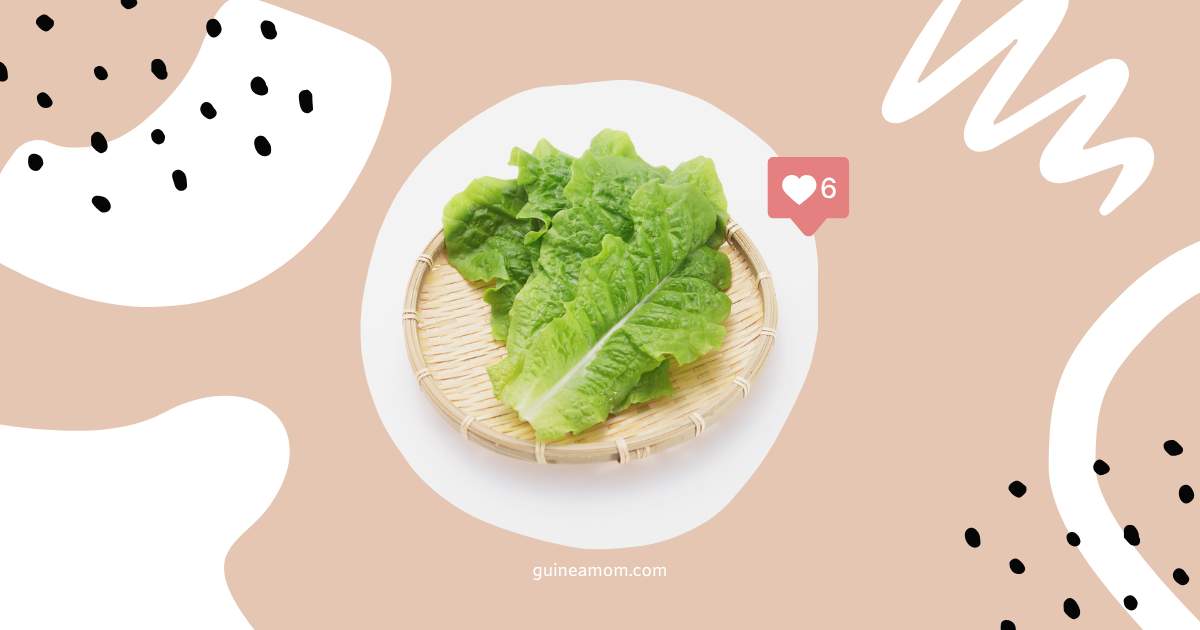
- Romaine (Cos) — the top choice. Rich in vitamin A, with useful vitamin C, B6, potassium, and iron, and importantly low in calcium and oxalates — making it suitable for regular feeding.
- Butterhead — a soft, nutritious option guinea pigs enjoy.
- Green leaf and red leaf lettuce — good, nutritious everyday choices.
- Little gem — nutritious and popular.
- Radicchio — another good variety for rotation.
How much: around one to two leaves per guinea pig, as part of their daily cup of mixed vegetables. Romaine is nutritious enough that many owners offer it most days — but vary the greens rather than serving the same one every day, and always combine lettuce with other vegetables (like bell pepper for vitamin C).
One caution even with good lettuce: guinea pigs love it so much they may fill up on lettuce and neglect their hay — so keep portions sensible and make sure hay remains the foundation of their diet.
What If My Guinea Pig Ate Iceberg Lettuce?
Don’t panic. A small amount is very unlikely to cause harm, since iceberg isn’t toxic.
What to do:
- Make sure they have plenty of hay and fresh water.
- Skip further iceberg and switch to a better lettuce variety.
- Watch their droppings for the next day or so.
Contact your vet if your guinea pig develops diarrhea lasting more than a few hours, stops eating (a genuine emergency in guinea pigs), produces few or no droppings, or becomes lethargic, quiet, or seems in pain.
Serving Lettuce Safely (Any Variety)
- Wash thoroughly. Lettuce is a frequent offender for pesticide residue and bacteria — a rinse in water (some owners use a vinegar-and-water solution) is worthwhile.
- Serve at room temperature, not straight from the fridge — cold food can cause digestive upset.
- Never feed wilted, slimy, or spoiled lettuce.
- Tear into manageable pieces.
- Remove uneaten lettuce after a few hours before it spoils.
- Introduce new varieties gradually, watching the droppings.
Key Takeaways
- Iceberg lettuce is best avoided — it isn’t toxic, but it’s not recommended for guinea pigs.
- It has almost no nutritional value (mostly water, very little vitamin C).
- Its high water content can cause diarrhea, which risks dangerous dehydration in a small animal.
- It fills pigs up without feeding them, displacing the hay that’s essential for digestion and dental health.
- Feed better lettuces instead — romaine (the best), butterhead, green leaf, red leaf, little gem, or radicchio — about one to two leaves per pig as part of their daily veg.
- If your pig ate some, don’t panic — provide hay and water, switch varieties, and watch their droppings.
- See a vet for diarrhea, loss of appetite, few droppings, or lethargy.
- Always wash lettuce well, serve at room temperature, and never feed wilted or spoiled leaves.
This article is intended as general educational information for guinea pig owners and is not a substitute for professional veterinary advice. If your guinea pig develops diarrhea, stops eating, or seems unwell, consult a qualified veterinarian experienced with guinea pigs promptly.